Orange is a basic color term, so it has very few exact synonyms. What English offers instead is a rich set of shade names. The most useful are amber, tangerine, apricot, coral, burnt orange, and rust. Each one describes a different brightness, warmth, or mood, which is why choosing carefully matters more than choosing something fancy.
Orange color is the hue that sits between red and yellow on the color wheel. It is the color of ripe oranges, carrots, autumn leaves, and the sky during some sunsets. In this sense, orange works as both a noun (“Orange is her favorite color”) and an adjective (“an orange scarf”).
Because orange is a basic color word, most alternatives are not true synonyms. They are more specific names for a particular shade, tint, or tone. Amber suggests a glowing yellowish orange, while rust suggests a dull reddish brown orange. So when people search for synonyms for orange color, they usually want one of three things: a fancier name, a more precise name, or a name that fits a brand, room, or piece of writing.
A second, smaller meaning exists too. Orange can also refer to the fruit itself, but this article focuses on the color.
Connotation and Nuance of Orange
Orange is warm, energetic, and friendly. It usually feels playful and optimistic, and it also signals caution in some settings, such as traffic cones and safety vests. Lighter shades like peach and apricot feel soft and gentle. Deeper shades like rust, terracotta, and burnt orange feel earthy, grounded, and autumnal.
That emotional range is the main reason word choice matters. A brand that calls its color “tangerine” sounds young and lively. One that calls it “terracotta” sounds handmade and calm. The base color may be similar, but the feeling is not.
Pronunciation of Orange
British English: /ˈɒrɪndʒ/ (OR inj)
American English: /ˈɔːrɪndʒ/ or /ˈɑːrɪndʒ/ (OR inj or AR inj)
The word has two syllables, with stress on the first. Many speakers pronounce it as two syllables even when they are unsure, and the second syllable is never pronounced “range.”
Etymology of Orange
The word came into English from the fruit. It traces back through Old French (orenge) to Arabic (naranj), which in turn is linked to Persian (narang) and Sanskrit. In early English the word was often heard as “a norange,” and the initial n was gradually lost because people misheard the article and the noun as “an orange.” The color name then developed from the fruit name. Before that, English speakers described the hue with words like yellow red.
Best Synonyms for Orange Color
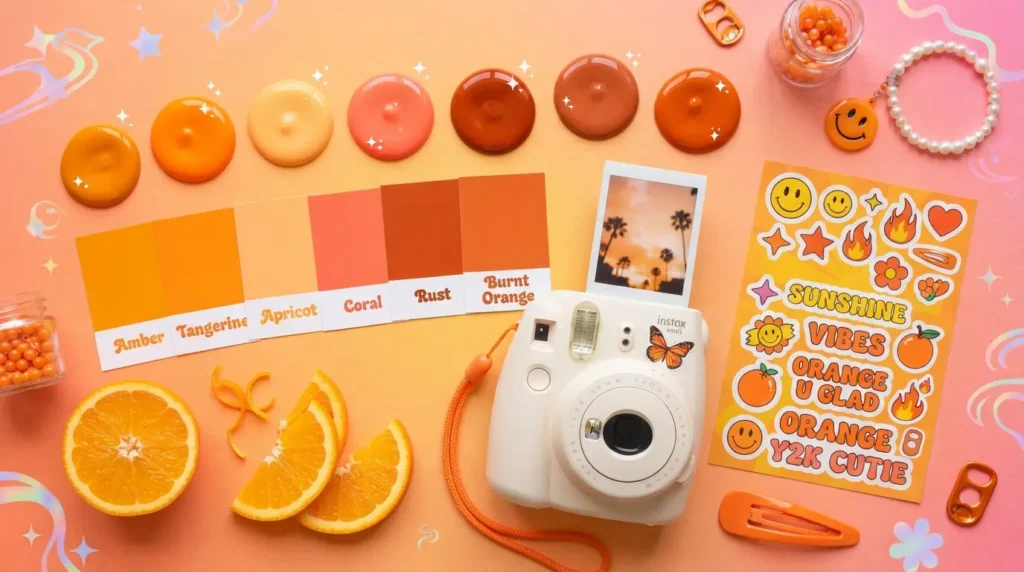
These are the five shade names most readers should learn first.
Amber is the best all round substitute. It is warm, glowing, and slightly yellow, and it works in writing, design, and everyday speech. It is more poetic than plain orange.
Tangerine is the pick for bright, energetic orange. It has a fresh, youthful tone and suits fashion, branding, and social media.
Apricot is a pale, soft orange with a gentle, friendly feel. Use it when the color needs to sound calm rather than loud.
Coral leans pink and feels lively and modern. It is popular in summer fashion and interior design.
Burnt orange is a deeper, slightly brownish orange with an autumn mood. It is one of the easiest names to understand because everyone can picture it.
30 Synonyms for Orange Color
A quick note on accuracy: none of the words below is an exact synonym for orange. Most are close alternatives or contextual alternatives, meaning they describe a specific shade of orange or a color that lives near orange on the wheel.
1. Amber
Part of Speech: noun, adjective
Meaning: A glowing yellowish orange, named after fossilized tree resin.
Best Use: Lights, eyes, drinks, and warm poetic description.
Tone or Register: Literary and neutral.
Difference: More golden and more transparent than plain orange.
Examples:
- The traffic light flickered from green to amber before she could brake.
- His eyes turned a deep amber in the afternoon light.
2. Tangerine
Part of Speech: noun, adjective
Meaning: A bright, saturated reddish orange, like the fruit.
Best Use: Fashion, branding, and lively design.
Tone or Register: Playful and casual.
Difference: Brighter and more energetic than ordinary orange.
Examples:
- She painted the accent wall tangerine to wake up the whole room.
- The brand’s tangerine logo stands out on a crowded shelf.
3. Apricot
Part of Speech: noun, adjective
Meaning: A pale, soft yellowish orange.
Best Use: Bridal palettes, nurseries, and gentle interiors.
Tone or Register: Soft and elegant.
Difference: Much lighter and less intense than orange.
Examples:
- The bridesmaids wore apricot dresses for the garden ceremony.
- We chose an apricot shade for the baby’s room.
4. Peach
Part of Speech: noun, adjective
Meaning: A light orange with a pink tint.
Best Use: Makeup, clothing, and cozy decor.
Tone or Register: Gentle and friendly.
Difference: Paler and pinker than orange.
Examples:
- Her peach blush looked natural in the daylight.
- The walls were painted a warm peach.
5. Coral
Part of Speech: noun, adjective
Meaning: A pinkish orange, named after marine coral.
Best Use: Summer fashion, lipstick, and tropical themes.
Tone or Register: Trendy.
Difference: Leans toward pink, while orange leans toward yellow.
Examples:
- He bought a coral shirt for the beach trip.
- The sunset faded from gold to coral.
6. Salmon
Part of Speech: noun, adjective
Meaning: A muted pinkish orange, like the flesh of the fish.
Best Use: Paint, clothing, and design descriptions.
Tone or Register: Neutral and practical.
Difference: Softer and pinker than orange, and less bright than coral.
Examples:
- The old house had salmon shutters and a white door.
- She matched the cushions to the salmon tones in the rug.
7. Burnt Orange
Part of Speech: noun, adjective
Meaning: A deep orange with brown in it.
Best Use: Autumn decor, sports colors, and fashion.
Tone or Register: Neutral and widely understood.
Difference: Darker and warmer than bright orange.
Examples:
- The sofa is a burnt orange velvet that suits the room.
- The team’s burnt orange jerseys were easy to spot.
8. Rust
Part of Speech: noun, adjective
Meaning: A reddish brown orange, like oxidized iron.
Best Use: Fall fashion, pottery, and moody interiors.
Tone or Register: Earthy and slightly vintage.
Difference: Duller and browner than orange.
Examples:
- Rust curtains made the study feel warm and quiet.
- The leaves turned rust and gold in late October.
9. Copper
Part of Speech: noun, adjective
Meaning: A metallic reddish orange.
Best Use: Hair color, kitchenware, and metallic finishes.
Tone or Register: Neutral and slightly upscale.
Difference: Carries a metallic shine that plain orange lacks.
Examples:
- She dyed her hair a natural looking copper.
- Copper pans hung above the stove.
10. Saffron
Part of Speech: noun, adjective
Meaning: A deep yellow orange, named after the spice.
Best Use: Food writing, textiles, and traditional clothing.
Tone or Register: Rich and cultural.
Difference: More golden and more spice like than orange.
Examples:
- The monks wore saffron robes.
- A saffron glow filled the kitchen at dusk.
11. Marigold
Part of Speech: noun, adjective
Meaning: A golden orange, like the flower.
Best Use: Gardens, festival decor, and cheerful design.
Tone or Register: Bright and cheerful.
Difference: Yellower and sunnier than orange.
Examples:
- Marigold garlands decorated the doorway.
- The poster used marigold to make the headline pop.
12. Pumpkin
Part of Speech: noun, adjective
Meaning: A medium, slightly muted orange.
Best Use: Autumn, Halloween, and seasonal content.
Tone or Register: Casual and seasonal.
Difference: Strongly tied to a season and a mood.
Examples:
- The café switched to pumpkin colored cups in October.
- She wore a pumpkin sweater to the fall market.
13. Carrot
Part of Speech: noun, adjective
Meaning: A vivid, clear orange.
Best Use: Casual description, especially of hair or food.
Tone or Register: Informal.
Difference: Very close to orange in shade, but more everyday.
Examples:
- The toddler’s carrot colored hair was hard to miss.
- The app icon was a bright carrot with a green leaf.
14. Mandarin
Part of Speech: noun, adjective
Meaning: A bright, slightly reddish orange, like the small citrus fruit.
Best Use: Design, packaging, and lifestyle branding.
Tone or Register: Fresh and modern.
Difference: Similar to tangerine, and a little softer.
Examples:
- The mandarin packaging felt clean and cheerful.
- She chose a mandarin lip color for the festival.
15. Papaya
Part of Speech: noun, adjective
Meaning: A soft, warm orange with a hint of pink.
Best Use: Fashion and tropical themes.
Tone or Register: Trendy and light.
Difference: Gentler and more tropical than orange.
Examples:
- The papaya swimsuit looked great against her tan.
- Papaya tones dominated the summer collection.
16. Cantaloupe
Part of Speech: noun, adjective
Meaning: A pale, creamy orange.
Best Use: Soft interiors and gentle color palettes.
Tone or Register: Mild and homely.
Difference: Lighter and creamier than orange.
Examples:
- The bedroom walls were a quiet cantaloupe.
- He picked a cantaloupe shade to warm the hallway.
17. Persimmon
Part of Speech: noun, adjective
Meaning: A deep reddish orange, like the ripe fruit.
Best Use: Fashion, art, and elegant branding.
Tone or Register: Sophisticated.
Difference: Deeper and redder than orange.
Examples:
- The designer’s persimmon coat drew attention at the show.
- Persimmon leaves glowed on the branches in autumn.
18. Terracotta
Part of Speech: noun, adjective
Meaning: A brownish orange, like baked clay.
Best Use: Home decor, pottery, and architecture.
Tone or Register: Earthy and calm.
Difference: More muted and handmade in feeling than orange.
Examples:
- Terracotta planters lined the balcony.
- The couple chose terracotta tiles for the kitchen floor.
19. Ochre
Part of Speech: noun, adjective
Meaning: An earthy yellow brown, sometimes leaning orange.
Best Use: Art, history, and natural landscapes.
Tone or Register: Artistic and slightly formal.
Difference: Usually browner and yellower than orange.
Examples:
- The cave paintings were done in ochre.
- An ochre haze hung over the desert.
20. Sienna
Part of Speech: noun, adjective
Meaning: An earthy pigment color, most often a reddish brown orange when called burnt sienna.
Best Use: Art supplies, painting, and design.
Tone or Register: Artistic.
Difference: Darker and more earthy than orange.
Examples:
- The painter mixed burnt sienna for the roof tiles.
- Sienna shadows stretched across the wall.
21. Russet
Part of Speech: noun, adjective
Meaning: A reddish brown with an orange tint.
Best Use: Nature writing, apples, and autumn leaves.
Tone or Register: Literary and traditional.
Difference: Much browner than orange.
Examples:
- Russet leaves crunched under their boots.
- He wore a russet jacket that matched the season.
22. Tawny
Part of Speech: adjective, noun
Meaning: A yellowish brown with an orange tint.
Best Use: Animals, fur, hair, and drinks.
Tone or Register: Literary.
Difference: Browner and more animal like than orange.
Examples:
- The tawny owl watched from the oak.
- Her tawny hair caught the evening light.
23. Vermilion
Part of Speech: noun, adjective
Meaning: A bright red orange, originally a pigment made from mercury sulfide.
Best Use: Art, architecture, and formal description.
Tone or Register: Formal and artistic.
Difference: Redder and more intense than orange.
Examples:
- The temple gate was painted vermilion.
- Vermilion streaks crossed the evening sky.
24. Ginger
Part of Speech: adjective, noun
Meaning: A reddish orange, mostly used for hair or animal fur.
Best Use: Describing hair and pets.
Tone or Register: Informal, mostly British. Note that some people may find it sensitive when used about a person.
Difference: Almost never used for clothes or paint.
Examples:
- Their ginger cat slept on the windowsill.
- The kitten had a ginger patch on its ear.
25. Flame
Part of Speech: noun, adjective
Meaning: A vivid orange red, like fire.
Best Use: Cars, dresses, and dramatic description.
Tone or Register: Dramatic.
Difference: Hotter and redder than orange.
Examples:
- She arrived in a flame colored dress.
- The car came in a flame finish that turned heads.
26. Mango
Part of Speech: noun, adjective
Meaning: A golden orange with warm yellow tones.
Best Use: Summer branding and food design.
Tone or Register: Fresh and casual.
Difference: Sunnier and softer than deep orange.
Examples:
- The smoothie shop used mango tones across its menu.
- A mango tint brightened the bottle label.
27. Nectarine
Part of Speech: noun, adjective
Meaning: A warm, juicy orange with a slight red blush.
Best Use: Cosmetics and soft fashion.
Tone or Register: Soft and stylish.
Difference: Warmer and gentler than orange.
Examples:
- She picked a nectarine lip gloss for spring.
- The scarf faded from nectarine to cream.
28. Cinnamon
Part of Speech: noun, adjective
Meaning: A warm reddish brown with an orange feel.
Best Use: Hair, leather, and cozy interiors.
Tone or Register: Warm and homely.
Difference: Browner and calmer than orange.
Examples:
- The cinnamon leather chair looked expensive.
- She asked the stylist for cinnamon highlights.
29. Bronze
Part of Speech: noun, adjective
Meaning: A brownish metallic orange.
Best Use: Sculpture, jewelry, and skin tone description in cosmetics.
Tone or Register: Neutral.
Difference: Metallic and browner than orange.
Examples:
- The bronze trim gave the lamp an old world charm.
- Bronze eyeshadow suited her evening look.
30. Clay
Part of Speech: noun, adjective
Meaning: A dull brownish orange, like earth or pottery.
Best Use: Paint charts, fashion, and product descriptions.
Tone or Register: Earthy and modern.
Difference: Flatter and less bright than orange.
Examples:
- The brand released a clay colored tote for autumn.
- We painted the front door clay.
Types of Synonyms for Orange Color
The words above fall into a few practical groups, and knowing them saves time.
Bright alternatives: tangerine, mandarin, carrot, flame, vermilion.
Soft or pale alternatives: apricot, peach, cantaloupe, nectarine, papaya.
Pinkish alternatives: coral, salmon, peach.
Golden or yellow leaning alternatives: amber, saffron, marigold, mango.
Deep or earthy alternatives: burnt orange, rust, terracotta, russet, sienna, cinnamon, clay.
Metallic alternatives: copper and bronze.
These groups matter because a reader who wants a warm, soft look should not be handed a fiery shade, and the reverse is also true.
Brightness Scale for Orange Shades
Orange shades do not have intensity in the same way emotion words do, but they do move along a scale from pale to deep.
pale: peach, apricot, cantaloupe
soft: nectarine, papaya, salmon
bright: tangerine, mandarin, carrot, marigold
deep: burnt orange, persimmon, flame, vermilion
earthy: rust, terracotta, russet, sienna, clay
Actual appearance depends on screens, lighting, and the brand or paint maker, so treat this scale as a general guide.
Common Collocations and Natural Usage
Some shade names pair naturally with certain nouns:
- amber: amber light, amber eyes, amber glow
- tangerine: tangerine dream, tangerine sky
- burnt orange: burnt orange sofa, burnt orange leaves
- terracotta: terracotta pot, terracotta tiles, terracotta roof
- copper: copper hair, copper pan, copper wire
- rust: rust colored, rust stain
- coral: coral lipstick, coral reef
- ginger: ginger cat, ginger hair
A few unnatural pairings are worth avoiding. Ochre is rarely used for clothing, and ginger is rarely used for paint. Vermilion sounds odd in casual conversation, where orange red would be clearer.
Orange vs Similar Words
1.Orange vs amber: Amber is a specific glowing yellowish orange. Orange is the broader term.
2.Orange vs coral: Coral leans pink, while orange leans yellow.
3.Orange vs rust: Rust is darker, duller, and browner, like oxidized metal.
4.Orange vs terracotta: Terracotta suggests baked clay and feels calmer and more natural.
5.Orange vs peach: Peach is lighter and softer, with a pink undertone.
How to Choose the Right Synonym
If you want a neutral, safe alternative, use amber or burnt orange.
Then If you want a playful and bright tone, use tangerine or mandarin.
If you want a soft, feminine feel, use apricot, peach, or papaya.
Then If you are writing about autumn or nature, use rust, russet, or pumpkin.
If you want an earthy interior look, use terracotta, clay, or cinnamon.
And If you are describing hair, use copper, ginger, or cinnamon.
Also If you need a formal or artistic word, use vermilion, ochre, or sienna.
Common Mistakes with Orange Color
Treating shade names as exact synonyms. Rust is not simply “orange,” and it will look brown to many readers.
Using coral and salmon as if they were the same. Coral is livelier and brighter, while salmon is more muted.
Using ochre for a vivid orange. Ochre is typically yellow brown and earthy.
Ignoring the audience. Terms like vermilion or persimmon may confuse casual readers, so add a simple description when it matters.
Using ginger about a person carelessly. It is common, but it can sound teasing in some settings.
Antonyms of Orange Color
Orange does not have a single true opposite, but it has a color wheel complement: blue. Blue is the standard contextual opposite in design. In terms of feeling, cool tones like navy, teal, and pale gray provide the emotional contrast to warm orange.
Related Words
These words are related to orange but are not synonyms: yellow, red, gold, auburn, brown, beige, and citrus. They sit near orange in meaning or appearance, but they name different colors.
FAQ
What is another word for orange color? The nearest options are amber, tangerine, and burnt orange, depending on the shade you mean.
What are the best synonyms for orange color? Amber, tangerine, apricot, coral, and burnt orange are the most useful and widely understood.
Is there an exact synonym for orange? Not really. Orange is a basic color term, so most alternatives describe a more specific shade.
What is a fancy word for orange? Vermilion, persimmon, saffron, and ochre sound more refined, though they each describe a slightly different tone.
What is the difference between coral and salmon? Coral is brighter and livelier. Salmon is softer and more muted.
What color is opposite to orange? Blue is the complementary color to orange on the color wheel.
Conclusion
Synonyms for orange color are really shade names, and each one carries its own meaning, mood, and level of brightness. Amber feels golden and glowing, tangerine feels playful, terracotta feels earthy, and coral leans pink. Before choosing a word, think about the exact hue, the setting, and the feeling you want the reader to have. A designer, a writer, and a shopper may all pick different words for the same color, and that is fine as long as the word fits the context. The best choice is the one your audience can picture at once.
Read More: Synonyms for Crab Mentality: 25 Powerful Words to Know

Hi, I’m Ayesha, the creator of InstantSynonyms.com. I believe the right word can transform a sentence, strengthen an idea, and make communication more impactful. That’s why I created this site, to help writers, students, professionals, and English learners find accurate synonyms, antonyms, and better word choices quickly and effortlessly.