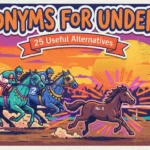
An underdog is a person, team, or company that is expected to lose. The strongest alternatives are long shot, dark horse, outsider, challenger, and giant killer. They are not identical: a dark horse is unknown but possibly strong, a long shot has slim odds, and a giant killer is an underdog that has already beaten a bigger opponent.
Underdog is a noun. It refers to a competitor who is considered less likely to win, usually because the opponent is stronger, richer, more experienced, or more famous. It is common in sports, politics, business, and entertainment.
Primary meaning: a competitor expected to lose. Example: “Nobody expected the small club to reach the final, but the underdog team surprised everyone.”
Extended meaning: a person who is disadvantaged in a struggle or system. Example: “She has always supported the underdog in a dispute.”
The word is countable (“two underdogs met in the semifinal”) and is often used with the article: “the underdog.” It also appears in phrases such as “underdog story” and “underdog victory.”
Connotation and Nuance of Underdog
Underdog is usually positive or sympathetic. It suggests courage, effort, and the hope that a weaker side can still win. People often root for the underdog, which is why the word appears so often in film, sport, and marketing.
However, the word is not always flattering. It can imply that someone is not taken seriously, and in some settings that may feel condescending. Calling a rival company “the underdog” in a meeting can sound like a compliment or a quiet insult, depending on tone.
Pronunciation of Underdog
British English: /ˈʌndədɒɡ/ (UN duh dog)
American English: /ˈʌndərdɔːɡ/ (UN der dawg)
The word has three syllables (un der dog) with the main stress on the first.
Etymology of Underdog
Underdog is a compound of under and dog. It is generally traced to the nineteenth century, when the word referred to the dog that was beaten or pinned beneath in a fight. It was later extended to any person or group that is losing or expected to lose. The opposite expression, top dog, developed from the same image.
Word Formation of Underdog
Underdog is a compound noun made of the word under and the noun dog. The plural is underdogs. Related expressions built on the same image include top dog and underdog story.
Best Synonyms for Underdog
Long shot is the best choice when the emphasis is on slim odds. It is common in betting, sport, and politics.
Dark horse is best when the competitor is little known but might surprise everyone. It suggests hidden strength.
Outsider is a neutral, widely understood word. It works well in racing, elections, and competitions.
Challenger is the professional, respectful option. It fits business and competition without suggesting weakness.
Giant killer is best after the upset has happened, or when a team has a record of beating stronger opponents.
25 Synonyms for Underdog
These words vary widely. A few are close synonyms, but many are contextual alternatives that work only in some situations. That is noted in each entry.
1. Long Shot
Part of Speech: noun
Meaning: A competitor or plan with a very small chance of success.
Best Use: Sport, betting, elections, and personal goals.
Tone or Register: Neutral and common.
Difference: Focuses on the odds rather than on the sympathy an underdog receives.
Examples:
- The rookie was a long shot for the title, yet she led after round two.
- Getting the grant felt like a long shot, but they applied anyway.
2. Dark Horse
Part of Speech: noun
Meaning: A little known competitor who unexpectedly turns out to be strong.
Best Use: Racing, politics, awards, and contests.
Tone or Register: Neutral and slightly journalistic.
Difference: Suggests hidden ability, not simply weakness.
Examples:
- The dark horse candidate surged ahead in the final week.
- Few noticed the dark horse at the back of the pack.
3. Outsider
Part of Speech: noun
Meaning: A competitor not regarded as likely to win.
Best Use: Racing, elections, and competitions.
Tone or Register: Neutral.
Difference: Emphasizes lower expectations rather than courage.
Examples:
- As an outsider in the race, he had little media attention.
- The outsider took the lead on the final lap.
4. Rank Outsider
Part of Speech: noun phrase
Meaning: A competitor with almost no chance according to expert opinion.
Best Use: Horse racing and British sport writing.
Tone or Register: Idiomatic and mostly British.
Difference: Stronger than outsider; it signals very long odds.
Examples:
- The rank outsider won at odds of fifty to one.
- Nobody backed the rank outsider before the vote.
5. Challenger
Part of Speech: noun
Meaning: A person or organization competing against a stronger or established rival.
Best Use: Business, boxing, and politics.
Tone or Register: Respectful and professional.
Difference: Does not stress weakness; it stresses the act of contesting.
Examples:
- The challenger startup went after the market leader’s customers.
- She faced the champion as the official challenger.
6. Contender
Part of Speech: noun
Meaning: Someone who competes for a prize, with a real chance.
Best Use: Sport, awards, and job races.
Tone or Register: Neutral.
Difference: Weaker as an underdog synonym; a contender may even be a favorite. It is a contextual alternative only.
Examples:
- No one thought she would become a title contender.
- He entered the tournament as a genuine contender.
7. Giant Killer
Part of Speech: noun
Meaning: A smaller team or competitor that beats much stronger opposition.
Best Use: Cup tournaments and football writing.
Tone or Register: Journalistic.
Difference: Describes a proven result, not just low expectations.
Examples:
- The giant killer from the fourth division reached the quarterfinals.
- Fans celebrated their local giant killer all season.
8. David (against Goliath)
Part of Speech: noun, allusion
Meaning: The weaker side in a very uneven contest, from the biblical story.
Best Use: Headlines, speeches, and business coverage.
Tone or Register: Figurative and dramatic.
Difference: Adds a moral and heroic feeling that underdog does not always carry.
Examples:
- The tiny publisher played David against the giant retailer.
- Critics described the lawsuit as David versus Goliath.
9. Cinderella Story
Part of Speech: noun phrase
Meaning: An unexpected rise from obscurity to success.
Best Use: American sport, especially tournaments.
Tone or Register: Informal and media style.
Difference: Describes the story or the team itself, and it has a fairy tale feel.
Examples:
- The college team became the tournament’s Cinderella story.
- Her rise from a small town gym was a real Cinderella story.
10. Minnow
Part of Speech: noun
Meaning: A small or weak team or company in a field of larger rivals.
Best Use: Sport and business.
Tone or Register: Informal and slightly dismissive.
Difference: Emphasizes size and status, not courage.
Examples:
- The minnow nation held the giants to a draw.
- As a minnow in the industry, the firm needed clever marketing.
11. Unfancied Side
Part of Speech: noun phrase
Meaning: A team that experts do not expect to do well.
Best Use: Sport, especially British football and cricket.
Tone or Register: Idiomatic and mostly British.
Difference: Pure expectation language with little emotional color.
Examples:
- The unfancied side beat the league leaders at home.
- Analysts described them as an unfancied side before the season.
12. Lower Seed
Part of Speech: noun phrase
Meaning: A competitor ranked below the opponent in a tournament.
Best Use: Tennis, basketball, and other seeded events.
Tone or Register: Technical.
Difference: Refers to official ranking, not to public feeling.
Examples:
- The lower seed stunned the champion in straight sets.
- Being a lower seed meant a difficult path to the final.
13. Wild Card
Part of Speech: noun
Meaning: A competitor admitted outside the normal qualification route.
Best Use: Tournaments and reality competitions.
Tone or Register: Neutral.
Difference: A wild card is not always an underdog, but often is. It is a contextual alternative.
Examples:
- The wild card player reached the semifinal.
- The show’s wild card contestant became a fan favorite.
14. Little Guy
Part of Speech: noun phrase
Meaning: A small person, business, or group up against a powerful one.
Best Use: Everyday speech, business, and politics.
Tone or Register: Informal and warm.
Difference: Emphasizes size and fairness, not competition odds.
Examples:
- The campaign promised to stand up for the little guy.
- Local bakeries are the little guy in this market.
15. Scrapper
Part of Speech: noun
Meaning: A determined competitor who fights hard, often against the odds.
Best Use: Sport and informal profiles.
Tone or Register: Informal.
Difference: Describes attitude rather than status.
Examples:
- The team was a scrapper and refused to give up.
- He grew up a scrapper in a tough neighborhood.
16. Battler
Part of Speech: noun
Meaning: A person who keeps struggling against difficulty.
Best Use: Australian and British English, profiles, and sport.
Tone or Register: Informal and admiring.
Difference: Focuses on perseverance, not the expected result.
Examples:
- Everyone respected him as a battler who never quit.
- The film honors the ordinary battler.
17. Upstart
Part of Speech: noun
Meaning: A newcomer who challenges an established group, sometimes with too much confidence.
Best Use: Business, politics, and sport.
Tone or Register: Can be negative or admiring depending on the speaker.
Difference: Adds a hint of presumption that underdog lacks.
Examples:
- The upstart brand challenged the old giants.
- Critics called her an upstart, but voters liked her energy.
18. Newcomer
Part of Speech: noun
Meaning: Someone new to a field, competing with established players.
Best Use: Awards, sport, and business.
Tone or Register: Neutral.
Difference: A contextual alternative; it says nothing about the odds.
Examples:
- The newcomer surprised veterans in the finals.
- A newcomer to the league, the club had modest expectations.
19. Sleeper
Part of Speech: noun
Meaning: Something or someone that succeeds unexpectedly after being overlooked.
Best Use: Films, sport, and product launches.
Tone or Register: Informal, common in American English.
Difference: Describes an unexpected success rather than a struggle.
Examples:
- The low budget movie became the sleeper hit of the year.
- Scouts regarded the young pitcher as a sleeper.
20. Spoiler
Part of Speech: noun
Meaning: A weaker competitor that ruins a stronger rival’s chances.
Best Use: Sport and elections.
Tone or Register: Informal.
Difference: A related role, not a full synonym; it is a contextual alternative.
Examples:
- The last place team played the spoiler in the final game.
- An independent candidate could act as a spoiler in the race.
21. Weaker Side
Part of Speech: noun phrase
Meaning: The team or party with less strength or support.
Best Use: Formal writing, analysis, and reports.
Tone or Register: Neutral and analytical.
Difference: Clear and plain, but lacks the emotional appeal.
Examples:
- Historians often study the weaker side of a conflict.
- Betting favored the stronger team over the weaker side.
22. Less Favored Competitor
Part of Speech: noun phrase
Meaning: A competitor not expected to win.
Best Use: Formal reports, academic writing, and analysis.
Tone or Register: Formal.
Difference: Very neutral and precise, with no emotional color.
Examples:
- The study focused on the less favored competitor in each match.
- The less favored competitor gained ground in the final round.
23. Outmatched Competitor
Part of Speech: noun phrase
Meaning: A competitor who is clearly weaker than an opponent.
Best Use: Formal sport analysis or narrative writing.
Tone or Register: Neutral to formal.
Difference: Stresses the mismatch itself, and does not suggest hope.
Examples:
- The outmatched competitor kept the score respectable.
- Commentators called him an outmatched competitor from the start.
24. Disadvantaged Party
Part of Speech: noun phrase
Meaning: A person or group at a structural disadvantage in a dispute.
Best Use: Legal, social, and academic writing.
Tone or Register: Formal.
Difference: Focuses on unfair conditions instead of a sporting result.
Examples:
- The court sought to protect the disadvantaged party.
- Policy should not favor the wealthier side over the disadvantaged party.
25. Fringe Contender
Part of Speech: noun phrase
Meaning: A competitor with an outside chance of winning.
Best Use: Politics, awards, and competitions.
Tone or Register: Journalistic.
Difference: Focuses on being on the edge of the race rather than on a fighting spirit.
Examples:
- Analysts treated him as a fringe contender for the nomination.
- The fringe contender received far less airtime than the frontrunners.
Types of Synonyms for Underdog
The list above splits into a few helpful groups.
Odds and expectations: long shot, outsider, rank outsider, lower seed, unfancied side.
Hidden strength: dark horse, sleeper, wild card.
Proven upsets: giant killer, Cinderella story, David against Goliath.
Fighting spirit: scrapper, battler, little guy.
Neutral or formal: challenger, weaker side, less favored competitor, disadvantaged party.
The group you choose changes the message. “Long shot” says the chances are slim. “Scrapper” says the person works hard. “Giant killer” says the upset already happened.
How Big an Underdog?
Underdog does not have a strict intensity scale, but some words suggest larger gaps than others:
slight underdog: contender, challenger, lower seed
clear underdog: outsider, unfancied side, weaker side
heavy underdog: long shot, minnow
extreme underdog: rank outsider, David against Goliath
Context decides everything. A lower seed in tennis may be a slight underdog, but the same word in another event might describe a serious mismatch.
Formality Scale for Underdog Alternatives
casual: little guy, scrapper, minnow, sleeper
neutral: outsider, long shot, dark horse, challenger
professional: contender, weaker side, fringe contender
formal or academic: less favored competitor, disadvantaged party, outmatched competitor
Common Collocations and Natural Usage
Some pairings sound natural and some do not:
- underdog story, underdog victory, underdog team
- long shot bid, long shot candidate, a bit of a long shot
- dark horse candidate, dark horse contender
- sleeper hit
- giant killer team, giant killing act
- back the underdog, root for the underdog
- rank outsider at long odds
It sounds unnatural to say a “dark horse” is someone who is weak and everyone knows it. A dark horse suggests hidden strength, so it does not fit a hopeless case.
Underdog vs Similar Words
Underdog vs dark horse: An underdog is expected to lose, and everybody knows it. A dark horse is unknown, so nobody can say how strong it is.
Underdog vs long shot: A long shot describes the odds of success. An underdog describes the competitor.
1.Underdog vs outsider: Outsider is more neutral and simply suggests lower expectations. Underdog invites sympathy.
2.Underdog vs challenger: A challenger is defined by the act of competing. It can even be a favorite.
3.Underdog vs sleeper: A sleeper is overlooked but succeeds later, while an underdog is known to be at a disadvantage.
How to Choose the Right Synonym
If you want a neutral option, use outsider or challenger.
Then If you want to stress slim odds, use long shot.
And If the competitor is unknown but promising, use dark horse.
Then If the upset has already happened, use giant killer or Cinderella story.
Then If you want a heroic image, use David against Goliath.
And If you want a formal option, use less favored competitor or weaker side.
If you are writing about social fairness, use disadvantaged party.
Also If you want to praise effort, use scrapper or battler.
Common Mistakes with Underdog
Using dark horse and underdog as exact matches. A dark horse has hidden strength; an underdog is openly expected to lose.
Using contender as a full replacement. A contender may be the favorite, so the meaning can shift.
Calling a proven winner an underdog. After the win, the story is often better told as an upset or a giant killing.
Writing “under dog” as two words. The standard spelling is one word.
Using upstart carelessly. It can sound negative even when you mean it kindly.
Antonyms of Underdog
The most useful opposites are favorite, front runner, and top dog. In sport, powerhouse and heavy favorite are also natural. In business, market leader works well.
Related Words
Upset, comeback, dark horse race, and against all odds are related expressions. They connect to the underdog idea, but they are not synonyms for the person or team.
FAQ
What is another word for underdog? Common alternatives are long shot, outsider, dark horse, and challenger.
What is the best synonym for underdog? Outsider is the safest neutral choice. Long shot is best for slim odds.
What is the difference between an underdog and a dark horse? An underdog is openly expected to lose. A dark horse is unknown and may surprise everyone.
Is underdog a positive word? Usually yes. It tends to inspire sympathy and support, though it may sound patronizing in some professional settings.
What is the opposite of underdog? Favorite, front runner, and top dog are the most common opposites.
How do you use underdog in a sentence? For example: “The underdog held on to win in the final minute.”
Conclusion
Synonyms for underdog share one idea, that someone is expected to lose, but they differ in feeling and precision. Long shot stresses the odds, dark horse hints at hidden strength, outsider is neutral, and giant killer celebrates an upset that has already happened. Formal options like less favored competitor suit reports, while scrapper and battler praise effort. Before choosing a word, think about the meaning you need, the tone you want, and whether the result has already happened. That small pause will help you pick the phrase that fits your reader, not just the one that looks similar.
Read More: Synonyms for Crab Mentality: 25 Powerful Words to Know

Hi, I’m Ayesha, the creator of InstantSynonyms.com. I believe the right word can transform a sentence, strengthen an idea, and make communication more impactful. That’s why I created this site, to help writers, students, professionals, and English learners find accurate synonyms, antonyms, and better word choices quickly and effortlessly.