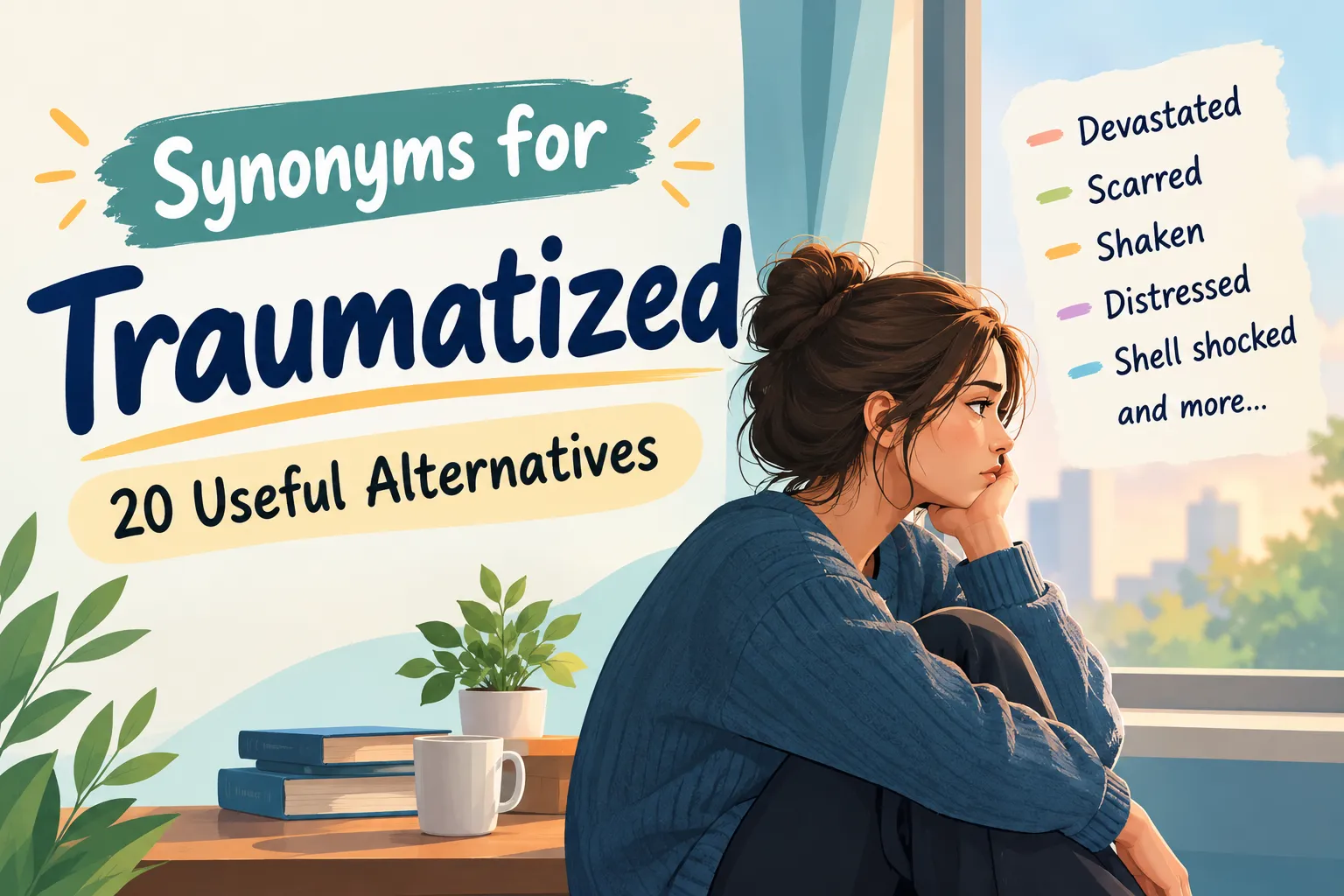
Traumatized describes someone deeply and often lastingly affected by a shocking, frightening, or painful experience. Close alternatives include shaken, scarred, and devastated, while milder situations are better described with words like rattled or shaken up. Choosing the right word depends heavily on how severe and lasting the effect actually was.
Meaning of Traumatized
Traumatized is the adjective form of the verb traumatize, meaning to cause someone lasting psychological harm or distress through a shocking, frightening, or deeply painful experience.
The word is used both in everyday speech and in clinical or psychological contexts, though its meaning shifts slightly depending on the setting. In clinical and psychological use, traumatized describes a person who has experienced significant, often lasting distress after events such as violence, abuse, an accident, or a disaster, sometimes connected to conditions such as post traumatic stress. In everyday, informal speech, people sometimes use traumatized more loosely to describe strong shock or distress from a difficult experience, such as a bad breakup or an embarrassing incident, without implying a clinical diagnosis.
Because the word carries real clinical weight in psychological contexts, it is worth being careful about using it casually for minor inconveniences, since doing so can unintentionally minimize the experience of people dealing with genuine, serious trauma.
Connotation and Nuance
Traumatized is a serious, emotionally heavy word. It signals real distress and lasting impact, not a passing annoyance or mild surprise. In clinical writing, the word is neutral and descriptive, used carefully to describe a genuine psychological response. In casual conversation, it can sometimes sound exaggerated if applied to something minor, such as saying a boring meeting was traumatizing, which risks trivializing the word’s serious meaning.
Pronunciation
Traumatized is pronounced either /ˈtrɔːmətaɪzd/ or /ˈtraʊmətaɪzd/, since the word trauma itself has two accepted pronunciations in English, one closer to draw and one closer to how. It has three syllables: trau ma tized.
Etymology
Traumatized comes from trauma, a word borrowed from Greek, where it originally meant a physical wound. English adopted trauma first in a medical sense describing a physical injury, and later extended it to describe psychological injury caused by a distressing experience. The verb traumatize was formed by adding the suffix ize to trauma, meaning to cause trauma, and traumatized is simply its past tense and adjective form.
Word Formation
The word family here is compact but important to understand clearly. Trauma is the root noun, referring to either a physical wound or a deeply distressing psychological experience. Traumatic is the adjective describing an event or experience that causes trauma, as in a traumatic accident. Traumatize is the verb describing the act of causing trauma. Traumatized is the past tense of the verb and also functions as an adjective describing a person affected by trauma. Traumatization is a more formal noun describing the process or state of becoming traumatized, used mostly in clinical or academic writing.
Best Synonyms for Traumatized
These alternatives cover the range of intensity that traumatized can carry, from clinical severity to milder emotional shock.
Devastated fits situations of severe emotional destruction, often after loss, betrayal, or tragedy, and carries a tone close to traumatized without being a clinical term.
Scarred works well for describing lasting emotional damage that persists long after the event itself, similar to a physical scar that remains after a wound heals.
Shaken describes a milder, though still real, emotional response, often used for someone rattled by a frightening or upsetting experience without implying long term psychological harm.
Distressed is a more general, slightly less intense word describing someone experiencing significant emotional pain or anxiety, useful when the full weight of traumatized is not appropriate.
Shell shocked, originally a term for soldiers affected by combat, is now used more broadly to describe someone deeply shaken and disoriented by an overwhelming experience.
Synonyms for Traumatized: Severe and Lasting Impact
1. Scarred
Part of Speech: Adjective Meaning: Left with lasting emotional damage from a difficult or painful experience. Best Use: Describing long term psychological effects, often years after the event. Difference: Emphasizes permanence more strongly than traumatized. Examples:
- Years later, she was still emotionally scarred by the accident.
- The experience left him scarred in ways he rarely talked about.
2. Devastated
Part of Speech: Adjective Meaning: Overwhelmed with severe emotional pain, often after loss or tragedy. Best Use: Grief, loss, and situations involving profound emotional destruction. Difference: Focuses on the intensity of the initial reaction rather than lasting psychological patterns. Examples:
- The family was devastated after the sudden loss.
- She felt devastated when she learned the truth.
3. Haunted
Part of Speech: Adjective Meaning: Continually troubled or affected by a memory of a distressing event. Best Use: Describing recurring, intrusive memories linked to trauma. Difference: Focuses specifically on persistent memory rather than the initial shock. Examples:
- He was still haunted by what he had witnessed that night.
- Her dreams remained haunted by the crash for years.
4. Wounded
Part of Speech: Adjective Meaning: Deeply hurt emotionally, often used figuratively to describe psychological injury. Best Use: Literary or emotional writing about deep emotional pain. Difference: More figurative and literary than traumatized. Examples:
- His pride was deeply wounded by the public criticism.
- She carried a wounded heart long after the betrayal.
5. Broken
Part of Speech: Adjective Meaning: Severely affected emotionally to the point of feeling unable to cope. Best Use: Describing profound emotional collapse after a serious event. Difference: More extreme and less clinical than traumatized. Examples:
- He seemed completely broken after the divorce.
- The survivors looked broken as they left the scene.
6. Traumatised (British Spelling)
Part of Speech: Adjective Meaning: Identical in meaning to traumatized, the standard British spelling. Best Use: British English writing and publications. Difference: Spelling only, no difference in meaning. Examples:
- The children were clearly traumatised by the ordeal.
- Support was offered to those traumatised by the incident.
Synonyms for Traumatized: Moderate Shock and Distress
7. Distressed
Part of Speech: Adjective Meaning: Experiencing significant anxiety, sadness, or emotional pain. Best Use: General emotional situations, including but not limited to trauma. Difference: Less severe and more general than traumatized. Examples:
- The distressed passengers were given water and blankets.
- She sounded distressed on the phone last night.
8. Disturbed
Part of Speech: Adjective Meaning: Emotionally unsettled or troubled by something upsetting. Best Use: Describing a strong emotional reaction to disturbing content or events. Difference: Slightly milder and more general than traumatized. Examples:
- Viewers were disturbed by the graphic footage.
- He seemed disturbed after reading the letter.
9. Unsettled
Part of Speech: Adjective Meaning: Left feeling uneasy, anxious, or not at ease. Best Use: Milder situations involving lingering discomfort. Difference: Much milder than traumatized, without implying serious harm. Examples:
- The strange noise left her feeling unsettled all evening.
- He felt unsettled after the unexpected news.
10. Rattled
Part of Speech: Adjective Meaning: Made nervous or shaken, often suddenly, informal in tone. Best Use: Everyday speech about temporary nervousness or shock. Difference: Much milder and more casual than traumatized. Examples:
- The near miss on the highway left her rattled for hours.
- He looked rattled after the surprise question in the interview.
11. Shaken
Part of Speech: Adjective Meaning: Emotionally affected and unsettled by a frightening or upsetting event. Best Use: General situations involving a strong but not necessarily lasting reaction. Difference: Less clinical and often less severe than traumatized. Examples:
- She was visibly shaken after the accident.
- He remained shaken for days after the break in.
12. Shell Shocked
Part of Speech: Adjective Meaning: Severely dazed and disturbed by an overwhelming or shocking experience. Best Use: Describing intense, disorienting shock, originally linked to combat trauma. Difference: Vivid and somewhat informal compared to the clinical tone of traumatized. Examples:
- Survivors of the disaster looked shell shocked as they were led to safety.
- He seemed shell shocked after the sudden layoffs were announced.
13. Overwhelmed
Part of Speech: Adjective Meaning: Affected by an experience so intense it becomes difficult to cope with. Best Use: Describing emotional or mental strain from a difficult situation. Difference: Focuses on being unable to cope rather than lasting psychological damage. Examples:
- She felt completely overwhelmed after the accident.
- The volunteers were overwhelmed by what they saw at the shelter.
14. Terrified
Part of Speech: Adjective Meaning: Extremely frightened, often during or immediately after a dangerous event. Best Use: Describing the fear component of a traumatic experience. Difference: Focuses on fear specifically rather than lasting emotional harm. Examples:
- The terrified passengers waited for help to arrive.
- She was terrified during the storm but unharmed.
15. Horrified
Part of Speech: Adjective Meaning: Filled with shock and disgust in reaction to something extremely disturbing. Best Use: Describing a strong emotional reaction to witnessing something disturbing. Difference: Focuses on shock and disgust rather than long term psychological effect. Examples:
- Witnesses were horrified by what they saw at the scene.
- She was horrified when she learned the full story.
Additional Alternatives
16. Victimized
Part of Speech: Adjective Meaning: Made to suffer harm, often unfairly, sometimes used to describe those affected by trauma. Best Use: Contexts emphasizing harm caused by another person’s actions. Examples:
- Employees felt victimized by the unfair new policy.
- The report focused on those victimized by the fraud.
17. Damaged
Part of Speech: Adjective Meaning: Left with lasting harm, used figuratively for emotional or psychological injury. Best Use: Informal or literary descriptions of lasting emotional harm. Examples:
- He came across as emotionally damaged after years of conflict at home.
- The relationship left her feeling damaged and distrustful.
18. Affected
Part of Speech: Adjective Meaning: Changed or influenced, often emotionally, by an experience. Best Use: General, neutral descriptions of emotional impact. Examples:
- Many residents were deeply affected by the flood.
- She was clearly affected by the news, though she tried to hide it.
19. Hurt
Part of Speech: Adjective Meaning: Emotionally pained, a general and common word for emotional injury. Best Use: Everyday conversation about emotional pain. Examples:
- He was hurt by the way his friends had treated him.
- She admitted she was still hurt over the incident.
20. Emotionally Scarred
Part of Speech: Adjective Phrase Meaning: Left with a lasting emotional wound from a distressing experience. Best Use: Emphasizing permanence in everyday or narrative writing. Examples:
- The soldiers returned emotionally scarred by what they had witnessed.
- Some survivors remain emotionally scarred long after the physical injuries heal.
Types of Synonyms for Traumatized
Grouping these words by intensity helps prevent under or overstating an experience.
Words describing severe, lasting harm include scarred, devastated, haunted, wounded, broken, and victimized, and these fit closely with the clinical weight of traumatized.
The Words describing moderate distress include distressed, disturbed, unsettled, overwhelmed, hurt, and affected, useful when the situation is serious but not necessarily long lasting.
Words describing immediate shock or fear include shaken, rattled, shell shocked, terrified, and horrified, useful for describing the moment of impact rather than long term psychological effects.
Intensity Scale
These words can be arranged roughly from mild to severe. Rattled and unsettled sit at the mild end, describing temporary nervousness. Shaken, disturbed, and distressed sit in the middle, describing real but not necessarily lasting distress. Devastated, scarred, haunted, and traumatized itself sit at the severe end, describing deep, often lasting psychological impact. This scale is a general guide rather than a strict rule, since context and the actual event described will always shape how strong a word feels.
Common Collocations and Natural Usage
Certain word pairings sound far more natural than others. People are commonly described as deeply traumatized, emotionally scarred, or visibly shaken, while phrases like slightly traumatized can sound awkward or dismissive given the word’s serious tone. Rattled pairs naturally with informal, everyday events, such as a near accident, while shell shocked pairs naturally with disaster, war, or sudden major loss. Choosing a milder word for a minor event, and a stronger word for a genuinely severe one, keeps the tone accurate and respectful.
Traumatized vs Similar Words
Traumatized and shaken differ mainly in severity and duration. Shaken often describes a temporary reaction that fades within hours or days, while traumatized implies a deeper, potentially long lasting psychological effect.
Traumatized and distressed differ in scope. Distressed is a broad, general word for emotional pain or anxiety from many possible causes, while traumatized specifically implies a shocking or deeply harmful triggering event.
Traumatized and devastated overlap closely in intensity, but devastated more often describes an immediate, overwhelming reaction, especially to loss, while traumatized more strongly implies lasting psychological impact that continues after the initial event.
How to Choose the Right Synonym for Traumatized
If describing a mild, temporary reaction to an unsettling event, rattled or shaken up are accurate and avoid overstating the situation, If describing a serious but general emotional reaction, distressed or overwhelmed fit well. If describing deep, lasting psychological harm following a genuinely severe event, scarred, haunted, or traumatized itself remain the most accurate choices. In clinical or professional writing, traumatized, traumatic, and traumatization are the precise, expected terms, while more casual words like shaken or rattled suit everyday conversation about less severe experiences.
Common Mistakes with Traumatized
A common mistake is applying traumatized to minor annoyances, such as a delayed flight or an awkward conversation, which can sound exaggerated and may unintentionally minimize the word’s real meaning for people who have experienced genuine trauma. Another mistake is assuming shaken and traumatized are fully interchangeable, when shaken usually implies a milder, more temporary reaction. It is also worth remembering that traumatized describes a lasting effect, while terrified and horrified describe an immediate emotional reaction that may or may not develop into lasting trauma.
Antonyms of Traumatized
There is no single perfect opposite, since traumatized describes lasting harm rather than a simple state with a clear reverse. However, words and phrases such as unaffected, unfazed, and emotionally secure describe someone who was not harmed by a difficult experience or who has since fully recovered.
Related Words
Trauma is the noun describing the distressing experience or its psychological effect, distinct from traumatized, which describes the person affected. Post traumatic stress is a related clinical term describing an ongoing condition that can follow a traumatic event, and it should not be used interchangeably with the general adjective traumatized without careful, accurate context.
FAQ
What does traumatized mean? Traumatized describes someone who has experienced lasting psychological harm or distress after a shocking, frightening, or deeply painful event.
What is another way to say traumatized? Depending on severity, scarred, devastated, and haunted work for serious, lasting impact, while shaken and rattled work for milder, more temporary reactions.
What is the strongest synonym for traumatized? Scarred and haunted both emphasize long lasting psychological impact, making them close in weight to traumatized.
Is shaken the same as traumatized? Not exactly. Shaken usually describes a milder, often temporary reaction, while traumatized implies deeper and potentially long lasting psychological harm.
Is it okay to use traumatized casually? It is common in everyday speech, but using it for very minor inconveniences can sound exaggerated and may minimize the experience of people dealing with genuine trauma.
What is the difference between traumatized and distressed? Distressed is a broader, more general word for emotional pain from many possible causes, while traumatized specifically implies a shocking or harmful triggering event with lasting effects.
What is the opposite of traumatized? There is no single exact opposite, though words like unaffected or unfazed describe someone who was not harmed or has fully recovered.
Conclusion
Traumatized is a serious word describing real, often lasting psychological harm, and the many words around it differ mainly in intensity and duration rather than basic meaning. A milder reaction is better described with words like rattled or shaken, a strong immediate response with words like devastated or overwhelmed, and deep, lasting harm with words like scarred or haunted. Matching the chosen word to the true severity of the experience being described keeps writing both accurate and respectful, especially in contexts where readers may have their own personal connection to the topic.
Read More: Synonyms for Film: 18 Useful Alternatives

Hi, I’m Ayesha, the creator of InstantSynonyms.com. I believe the right word can transform a sentence, strengthen an idea, and make communication more impactful. That’s why I created this site, to help writers, students, professionals, and English learners find accurate synonyms, antonyms, and better word choices quickly and effortlessly.
Every article is easy to understand, and designed to save you time while improving your vocabulary and writing. Whether you’re searching for a stronger alternative, a more precise expression, or simply expanding your word knowledge, my goal is to make finding the perfect word simple, fast, and reliable.