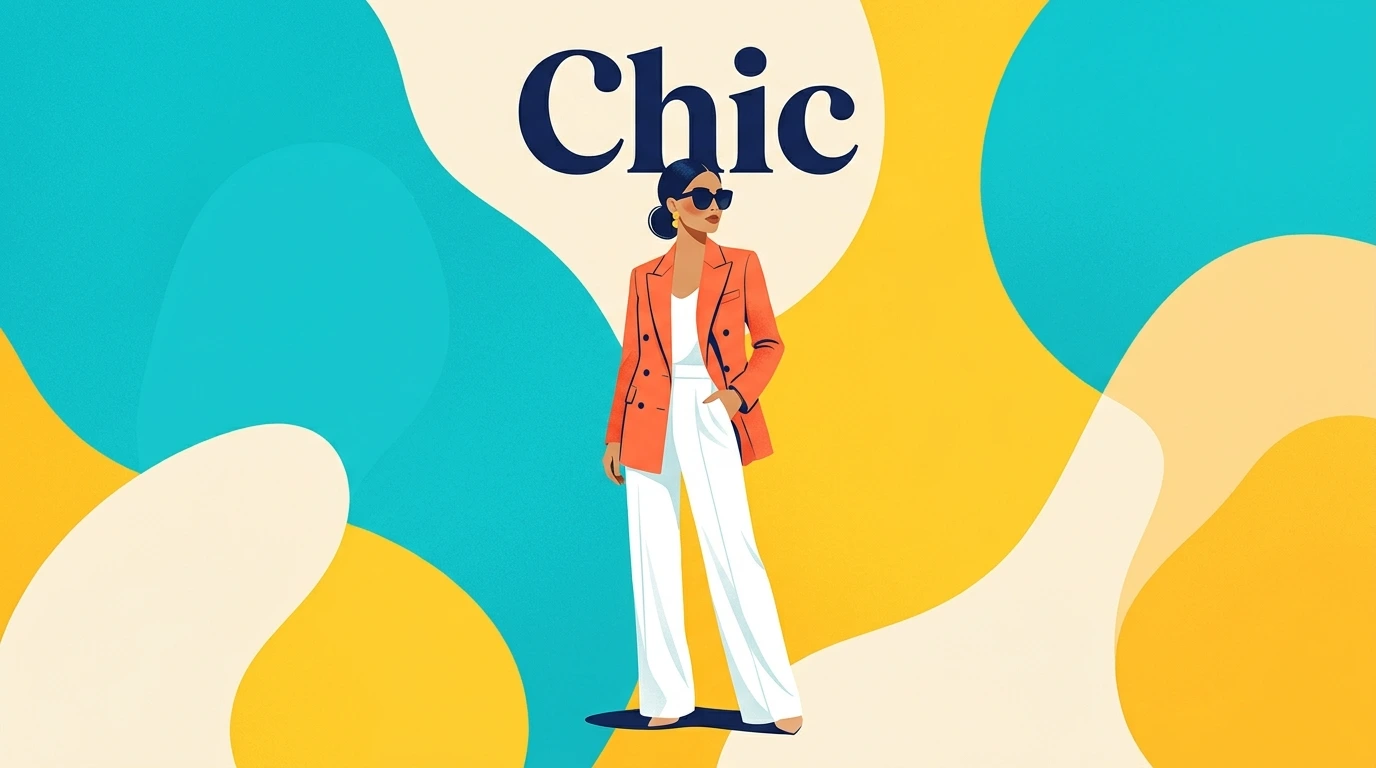
Chic means stylish in an effortless, tasteful way. The best everyday alternatives are stylish, fashionable, elegant, and smart. Choose trendy for current fads, sleek for clean lines, and dapper for a well dressed man.
Meaning of Chic
Chic is an adjective that means attractive, fashionable, and stylish, often with a sense of taste and ease. A chic hat, a chic café, and a chic apartment all look current and well judged without looking loud.
It also works as a noun. In that use it names style and elegance itself, as in “Paris clothes have such chic.” As a noun it often appears in labels for a particular look, such as urban chic or geek chic.
Here are two natural examples:
- Adjective: Maya wore a chic linen jumpsuit to the gallery opening.
- Noun: Her little studio has real chic, even though nothing in it was expensive.
Chic can describe people, clothes, places, objects, and design. In British English the adjective leans slightly toward elegant clothing and fashionable people.
Connotation and Nuance
Chic is a positive word. It suggests good taste, confidence, and a look that seems easy rather than forced. That sense of ease is why people say “effortlessly chic” so often.
It does not always mean expensive. A simple outfit of a white shirt and dark trousers can be chic, while a costly outfit covered in logos may not be.
The word can also carry a playful or mocking edge in certain labels. Shabby chic describes a deliberately worn, soft look in home décor. Radical chic became a mocking label after a 1970 essay by Tom Wolfe, where it described fashionable people adopting political causes for style.
Pronunciation of Chic
Chic is one syllable and sounds like “sheek”: /ʃiːk/. American dictionaries show /ʃik/, while British dictionaries show /ʃiːk/ and sometimes /ʃɪk/.
The “chick” pronunciation is considered nonstandard, except when someone uses it as a joke. The word is French in origin, so the “ch” sounds like “sh.”
Where Chic Comes From
Chic was borrowed into English from French in the 1850s. The earliest English use, recorded in 1856, was about artistic skill and the ability to produce something excellent quickly and easily.
By 1879 English speakers used it as an adjective for stylish people. By 1882 it meant Parisian elegance mixed with originality. One reviewer in 1888 called it an untranslatable word, which explains why English never found a perfect replacement.
The deeper origin is uncertain. One suggestion links it to German Schick, meaning skill or aptness, but this is not confirmed.
Word Forms of Chic
The comparative and superlative forms listed in dictionaries are chicer and chicest. The phrases more chic and most chic are also natural.
Related forms include the adverb chicly, the noun chicness, and the intensified forms superchic and ultrachic. Do not confuse chic with chichi, which is a separate word. Chichi usually describes something too elaborate or pretentious.
Best Synonyms for Chic
These five words cover most situations. Learn them first, in this order.
1. Stylish. This is the safest everyday replacement. It is neutral, widely understood, and works for people, clothes, and places. It loses the French polish of chic but keeps the meaning.
2. Fashionable. Use this when the point is that something suits current fashion. It is more about timing than taste, so it can describe a look that is popular but not especially refined.
3. Elegant. Pick this when grace and refinement matter more than trends. An elegant dress could be decades old and still be elegant, which is not true of fashionable.
4. Sophisticated. This suggests worldly taste and confidence. It works well for restaurants, hotels, and personal style, though it also has a separate meaning of complex, as in a sophisticated machine.
5. Smart. In British English, smart means neat and well dressed. In American English it usually means intelligent, so check your audience before using it for clothing.
30 Synonyms for Chic
These are grouped by the job each word does. Where a word is not a true synonym, the label says so.
Everyday Alternatives
1. Stylish (close synonym)
Part of Speech: Adjective
Meaning: Having a fashionable and attractive appearance.
Best Use: Almost anywhere: clothing, rooms, cars, restaurants, and people.
Difference: Stylish is plainer than chic. It lacks the sense of effortless, understated taste.
Examples:
- The hotel lobby felt stylish without being flashy.
- Nina found a stylish raincoat for under fifty dollars.
2. Fashionable (close synonym)
Part of Speech: Adjective
Meaning: Following or suited to the current fashion.
Best Use: Describing neighborhoods, clothes, habits, and places that are popular right now.
Difference: Fashionable depends on what is popular. Chic depends more on taste, so a chic look can outlast a season.
Examples:
- It became fashionable to wear oversized blazers to the office.
- Her cousin lives in the most fashionable part of town.
3. Smart (close synonym in British use)
Part of Speech: Adjective
Meaning: Neat, clean, and well dressed.
Best Use: Dress codes, interviews, and formal events, especially in British English.
Tone or Register: Neutral and common in British English.
Difference: Smart is tidier and more formal than chic. In American English it usually means clever, so it can confuse readers there.
Examples:
- Please dress smart for the dinner on Friday.
- Ravi turned up in a smart navy suit.
4. Cool (contextual alternative)
Part of Speech: Adjective
Meaning: Fashionable and impressive in a relaxed way.
Best Use: Casual speech about people, music, shops, and clothing.
Tone or Register: Informal.
Difference: Cool is broader and more casual. It can describe attitude as well as appearance, while chic stays closer to taste and style.
Examples:
- That vintage jacket is so cool on you.
- We found a cool little bookshop near the station.
5. Sharp (contextual alternative)
Part of Speech: Adjective
Meaning: Neatly and fashionably dressed.
Best Use: Talking about someone’s outfit, especially a suit or a tailored look.
Tone or Register: Informal.
Difference: Sharp is crisp and clean cut, while chic is softer and more relaxed.
Examples:
- You look sharp in that grey jacket.
- Our new manager is a sharp dresser.
Refined and Elegant Options
6. Elegant (near synonym)
Part of Speech: Adjective
Meaning: Graceful, tasteful, and refined in appearance or manner.
Best Use: Formal clothing, interiors, handwriting, movement, and polished design.
Tone or Register: Neutral to formal.
Difference: Elegant stresses grace and does not need to be current. It also has a non fashion sense, as in “an elegant solution.”
Examples:
- An elegant staircase curved up from the entrance hall.
- The mathematician offered an elegant proof of the problem.
7. Sophisticated (near synonym)
Part of Speech: Adjective
Meaning: Showing worldly experience and refined taste.
Best Use: Restaurants, cities, fashion, and people with cultured taste.
Difference: Sophisticated sounds more grown up and cultured than chic. It also describes complex machines and ideas, which chic never does.
Examples:
- The bar attracts a sophisticated crowd after work.
- Delphine has a sophisticated sense of style that never follows trends.
8. Refined (near synonym)
Part of Speech: Adjective
Meaning: Cultured and free from anything coarse.
Best Use: Manners, taste, and carefully finished design.
Tone or Register: Formal.
Difference: Refined is quieter and more traditional than chic. It rarely suggests fashion or trends.
Examples:
- Their refined taste showed in every piece of furniture.
- A refined palette of cream and grey ran through the room.
9. Polished (near synonym)
Part of Speech: Adjective
Meaning: Neat, finished, and professionally well presented.
Best Use: Appearance, performances, speeches, and workplace style.
Difference: Polished suggests careful preparation. Chic often looks more relaxed and unplanned.
Examples:
- The candidate gave a polished answer to every question.
- A polished look can come from a single well fitted blazer.
10. Tasteful (contextual alternative)
Part of Speech: Adjective
Meaning: Showing good judgment about what looks right.
Best Use: Décor, jewelry, gifts, and subtle clothing.
Difference: Tasteful is milder and safer than chic. It means nothing is wrong, while chic adds a spark of style.
Examples:
- Everything about the wedding felt tasteful and calm.
- A tasteful gold necklace was the only accessory she needed.
11. Sleek (contextual alternative)
Part of Speech: Adjective
Meaning: Smooth, simple, and modern in shape.
Best Use: Cars, phones, furniture, hairstyles, and clean modern design.
Difference: Sleek is about lines and surfaces. A sleek object can look cold, while chic usually looks warm and personal.
Examples:
- A sleek black laptop sat alone on the desk.
- Her sleek ponytail looked perfect after the flight.
Trend Focused Words
12. Trendy (close synonym)
Part of Speech: Adjective
Meaning: Following the latest trends.
Best Use: Cafés, neighborhoods, clothes, and products popular at the moment.
Tone or Register: Informal. Sometimes slightly critical.
Difference: Trendy can suggest a short lived fad. Chic suggests lasting taste, so calling something trendy is not always a compliment.
Examples:
- The trendy new gym opened right beside our office.
- Pastel sneakers are trendy this spring.
13. Modish (close synonym)
Part of Speech: Adjective
Meaning: Fashionable in a current way.
Best Use: Formal or literary writing about clothes and design.
Tone or Register: Formal and somewhat old fashioned.
Difference: Modish sounds dated and a little stiff. Chic feels modern and natural.
Examples:
- The novel describes the modish dresses of 1920s London.
- A modish hat made her stand out in the crowd.
14. Voguish (close synonym)
Part of Speech: Adjective
Meaning: Fashionable at the moment.
Best Use: Literary or critical writing, especially about trends in art and style.
Tone or Register: Formal and uncommon.
Difference: Voguish is rarer and can sound slightly disapproving. It stresses popularity over taste.
Examples:
- The critic dismissed the voguish style of that year’s designers.
- A voguish interest in minimalism filled the magazines.
15. On trend (contextual alternative)
Part of Speech: Adjective phrase
Meaning: Matching the current trends.
Best Use: Retail, marketing, and fashion advice.
Tone or Register: Informal and commercial.
Difference: On trend is about timing only. It says nothing about taste or quality.
Examples:
- This season’s on trend colors include olive and burnt orange.
- The store keeps its window displays on trend.
16. In vogue (contextual alternative)
Part of Speech: Adjective phrase
Meaning: Currently fashionable or popular.
Best Use: After a verb, as in “be in vogue” or “come back in vogue.”
Tone or Register: Neutral to slightly formal.
Difference: In vogue works only after a verb, so you cannot say “an in vogue dress” as naturally as “a chic dress.”
Examples:
- Wide leg trousers are back in vogue.
- Cycling to work has been in vogue for years in this city.
17. Fashion forward (stronger alternative)
Part of Speech: Adjective phrase
Meaning: Ahead of the current trends and bold in style.
Best Use: Designers, stylists, and people who wear new looks before others do.
Difference: Fashion forward is bolder than chic. Chic can be quiet, while fashion forward draws attention.
Examples:
- The boutique is known for its fashion forward designers.
- A fashion forward student wore a sculpted jacket to class.
18. Au courant (contextual alternative)
Part of Speech: Adjective phrase
Meaning: Up to date and well informed about current trends.
Best Use: Formal or witty writing about fashion, art, ideas, and news.
Tone or Register: Formal and slightly showy, borrowed from French.
Difference: Au courant covers awareness of trends in general, not just attractive style. It can describe ideas as well as clothing.
Examples:
- The magazine keeps its readers au courant with the latest design.
- An au courant gallery owner knew the new artists first.
19. Hip (contextual alternative)
Part of Speech: Adjective
Meaning: Aware of and part of the latest trends.
Best Use: Casual talk about music, neighborhoods, and youth culture.
Tone or Register: Informal.
Difference: Hip is about being in the know and has little to do with elegance. A hip café may not be chic at all.
Examples:
- They moved to a hip district full of record shops.
- The band wanted a hip image for the album.
Luxury and Status Words
20. Glamorous (near synonym)
Part of Speech: Adjective
Meaning: Exciting, attractive, and associated with luxury.
Best Use: Red carpet events, travel, parties, and film star style.
Difference: Glamorous is louder and more dramatic than chic. Chic is often understated.
Examples:
- The gala felt glamorous, with sequins and champagne everywhere.
- Many people picture a glamorous life behind the fashion industry.
21. Classy (close synonym)
Part of Speech: Adjective
Meaning: Having high quality, style, and good taste.
Best Use: Casual conversation about outfits, places, and behavior.
Tone or Register: Informal.
Difference: Classy can also describe polite behavior, as in “a classy apology.” Chic is limited to style.
Examples:
- Dinner at that little restaurant is classy but not stuffy.
- Returning the lost wallet was a classy thing to do.
22. Swanky (near synonym)
Part of Speech: Adjective
Meaning: Stylish and expensive looking.
Best Use: Hotels, bars, clubs, and shops that show off wealth.
Tone or Register: Informal.
Difference: Swanky stresses expense and display. Chic can be inexpensive and quiet.
Examples:
- They celebrated in a swanky rooftop bar downtown.
- A swanky car was parked outside the hotel.
23. Posh (contextual alternative)
Part of Speech: Adjective
Meaning: Elegant and expensive, or linked to the upper class (British).
Best Use: British English for hotels, restaurants, schools, and accents.
Tone or Register: Informal. Can sound mocking.
Difference: Posh is about class and cost, not taste. It can be a compliment or a gentle tease.
Examples:
- We stayed in a posh hotel near the river.
- Some classmates teased him for his posh accent.
24. Upscale (contextual alternative)
Part of Speech: Adjective
Meaning: Aimed at wealthy customers and of high quality.
Best Use: American business writing about shops, neighborhoods, restaurants, and brands.
Tone or Register: Neutral and commercial.
Difference: Upscale describes price level and target customers. Chic describes the style, and a chic place does not need high prices.
Examples:
- The company opened an upscale grocery store in the suburb.
- An upscale hotel chain bought the old building.
Words for People and Manner
25. Dapper (contextual alternative)
Part of Speech: Adjective
Meaning: Neat, trim, and smartly dressed, usually said of a man.
Best Use: Describing a person whose clothes are tidy and charming.
Tone or Register: Slightly old fashioned and affectionate.
Difference: Dapper describes a person, not a place or object. It also suggests neatness more than fashion.
Examples:
- Grandpa looked dapper in his tweed jacket and bow tie.
- A dapper waiter greeted us at the door.
26. Natty (contextual alternative)
Part of Speech: Adjective
Meaning: Neat, trim, and stylish.
Best Use: Informal, often British, descriptions of a well turned out outfit.
Tone or Register: Informal and somewhat dated.
Difference: Natty is smaller in scale than chic. It praises tidiness and flair in a single outfit, not overall taste.
Examples:
- The conductor wore a natty waistcoat.
- Joe is a natty dresser who always matches his socks.
27. Dashing (contextual alternative)
Part of Speech: Adjective
Meaning: Stylish, bold, and attractive in a confident way.
Best Use: Describing a charming person, often in stories or playful writing.
Tone or Register: Literary or playful.
Difference: Dashing adds energy and romance. It describes a person’s presence, not just their clothes.
Examples:
- The dashing captain stepped off the ship in a red coat.
- He cut a dashing figure at the ball.
28. Debonair (contextual alternative)
Part of Speech: Adjective
Meaning: Charming, confident, and stylish in manner.
Best Use: Describing a man with easy charm, especially in formal or literary writing.
Tone or Register: Formal and literary.
Difference: Debonair is about manner as well as looks. It is not used for objects or places.
Examples:
- The debonair host welcomed every guest by name.
- Old films often show a debonair detective in a tailored suit.
29. Urbane (related expression)
Part of Speech: Adjective
Meaning: Polite, refined, and confident in social situations.
Best Use: Describing a person’s manners, speech, and style of conversation.
Tone or Register: Formal.
Difference: Urbane is not a true synonym. It is about social polish and manner, not clothing or design.
Examples:
- The urbane diplomat moved easily between languages and cultures.
- Her urbane humor made the dinner feel relaxed.
30. Suave (related expression)
Part of Speech: Adjective
Meaning: Smoothly charming and polished in manner.
Best Use: Describing a confident person, often a man, in social settings.
Tone or Register: Neutral to slightly critical.
Difference: Suave is not a true synonym. It describes charm of manner, and it can hint that someone is a little too smooth.
Examples:
- The suave salesman had an answer for every objection.
- A suave smile helped him win over the room.
Types of Synonyms for Chic
Chic has no single perfect replacement because it combines several ideas: taste, ease, and current style. Different synonyms keep different parts of that mix. Grouping them helps you pick the part you want to keep.
- Everyday alternatives: stylish, fashionable, smart, cool, sharp.
- Refined and elegant: elegant, sophisticated, refined, polished, tasteful, sleek.
- Trend focused: trendy, modish, voguish, on trend, in vogue, fashion forward, au courant, hip.
- Luxury and status: glamorous, classy, swanky, posh, upscale.
- For people and manner: dapper, natty, dashing, debonair, urbane, suave.
The first three groups work for objects, places, and people. The last group works mainly for people.
Understated to Showy: A Style Scale
Many of these words differ in how much attention they ask for. The order below is a general guide, and context can move a word up or down.
- Quiet: tasteful, refined, polished
- Balanced: elegant, chic, stylish, smart
- Trend led: fashionable, trendy, fashion forward
- Showy: glamorous, swanky
Chic sits near the quiet and balanced end. That is why a plain white shirt can be chic but is rarely glamorous.
Formality of the Alternatives
- Casual and spoken: cool, hip, sharp, classy, swanky, natty
- Neutral: stylish, fashionable, smart, trendy, polished
- Formal: elegant, sophisticated, refined, urbane, debonair
- Formal or literary: modish, voguish, au courant, dashing
Some words differ by context, not formality. Upscale and posh are about price and class, while sleek is about design.
Common Collocations and Natural Usage
Chic pairs naturally with nouns for places, clothes, and looks.
- Places: a chic café, a chic boutique, a chic hotel, a chic apartment
- Clothes: a chic dress, a chic outfit, a chic hat
- With adverbs: effortlessly chic, understated chic
- Noun labels: urban chic, geek chic, shabby chic
Other synonyms prefer different partners. Say sleek design, sleek car, or sleek hair. Say a sharp suit or a sharp dresser. Say a posh hotel, a swanky bar, or an upscale neighborhood. Say a polished performance, a trendy café, and a fashionable district.
Words like dapper, debonair, and suave belong to people, so they sound strange when attached to a building or a product.
Chic vs Similar Words
Chic vs Stylish
Stylish is the broader, plainer word. Chic adds a sense of ease, taste, and sometimes a French or urban flavor. Use stylish for general writing and chic when you want to praise restrained, confident style.
Chic vs Trendy
Trendy means following what is popular right now. Chic suggests taste that does not depend on a season. A trendy outfit may look dated in a year, while a chic outfit can stay good for much longer.
Chic vs Elegant
Elegant is about grace and refinement and does not need to be current. Chic carries a modern, fashionable feeling. An antique chair can be elegant, while a modern boutique is more likely to be chic.
Chic vs Glamorous
Glamorous is louder and more luxurious. Chic is often simple and understated. A film premiere is glamorous, while a neat outfit on a city street is chic.
Chic vs Chichi
These two look alike but are not synonyms. Chichi usually describes something overdone or pretentious. Chic is a compliment, while chichi is often a criticism.
How to Choose the Right Synonym
- If you want a plain, neutral alternative, use stylish.
- If you want to describe something popular right now, use fashionable or trendy.
- If grace matters more than fashion, use elegant or refined.
- If you are writing about a place with high prices, use upscale or swanky.
- If you are describing a well dressed man, use dapper or sharp.
- If you want clean modern lines, use sleek.
- If you are speaking casually, use cool, classy, or sharp.
- If you are writing formally, use sophisticated, elegant, or modish.
Ask one question first: does the word describe taste, timing, price, or manner? That answer usually points to the right synonym.
Common Mistakes with Chic
Pronouncing it “chick.” The standard sound is “sheek.” The other sound is accepted only as a joke.
Using smart for clothing in American English. In the United States, smart usually means intelligent. Use stylish or well dressed in American writing.
Treating trendy as a perfect match. Trendy can sound critical, as if the style will soon be forgotten. It does not carry the lasting good taste of chic.
Using chic for things that are loud or showy. Chic implies restraint. Glamorous or flashy is a better fit for a bold, sparkling look.
Using dapper or debonair for objects. These words describe people. A chair or building cannot be dapper.
Confusing chic and chichi. Chichi is usually negative and means something overly elaborate or pretentious.
Antonyms of Chic
Chic has no single opposite, but these words work as contextual opposites:
- Unfashionable: not in style
- Dowdy: plain and old fashioned in a dull way
- Frumpy: dull and badly dressed
- Drab: dull and lacking color or interest
- Tacky: cheap looking and in poor taste
- Outdated: no longer modern
Pick tacky for poor taste, dowdy for dull old fashioned clothing, and unfashionable for a neutral statement.
Related Words
These words connect to chic but are not true synonyms.
- Chichi: overly elaborate or pretentious
- Panache: a confident, stylish manner
- Flair: a natural talent for style
- Couture: high fashion made to order
- Minimalist: simple and stripped back in design
- Vintage: old and valued for its style
Frequently Asked Questions
What does chic mean?
Chic means stylish and fashionable in a tasteful, often effortless way. It can also be a noun meaning style and elegance.
What is another way to say chic?
The easiest alternatives are stylish, fashionable, elegant, and smart. Use sleek for clean lines and dapper for a well dressed man.
What is the most formal synonym for chic?
Elegant, sophisticated, and refined work well in formal writing. Modish and voguish are formal too, but they sound dated.
Are chic and trendy the same?
No. Trendy means following current fashion and can sound short lived. Chic suggests lasting good taste.
How do you pronounce chic?
Say “sheek.” The “chick” sound is nonstandard.
What is the opposite of chic?
Common opposites are unfashionable, dowdy, frumpy, drab, and tacky. Which one fits depends on the context.
Conclusion
Chic is a small word with a lot packed inside: taste, ease, and a sense of current style. That is why no single synonym can replace it in every sentence.
Stylish is the safest swap. Choose elegant when grace matters, trendy when timing matters, sleek when design matters, and dapper when you are describing a person. Before you replace chic, think about meaning, context, tone, strength, formality, and natural usage. The right word is the one that keeps the picture you had in mind.
Read More: Synonyms for Workplace Culture: 12 Useful Alternatives

Hi, I am Abid, a writer and editor at InstantSynonyms.com, where he creates clear and reader-friendly content about synonyms, vocabulary, and English word usage. His goal is to help readers choose the right words, expand their vocabulary, and write with greater confidence.