Devious describes someone or something dishonest, deceptive, or willing to use underhanded methods to achieve a goal. Strong alternatives include sneaky, cunning, and underhanded. Milder options include crafty and calculating, while stronger options like scheming and duplicitous emphasize deliberate, sustained deception. Choosing the right word from this family matters more than it might seem, since each synonym carries its own shade of intent, severity, and tone, and swapping the wrong one in can accidentally soften or exaggerate the point you’re trying to make.
Meaning of Devious
Devious is an adjective describing a person, plan, or method that is deceitful or evasive, typically involving indirect or dishonest means to reach a goal. It can describe someone’s character, as in “a devious coworker,” or a specific strategy, as in “a devious scheme.” In both cases, the word signals that something dishonest or hidden lies underneath the surface behavior.
The word almost always carries a negative connotation. Unlike words such as clever or resourceful, which can be neutral or complimentary, devious implies that dishonesty or manipulation is involved. Someone described as devious isn’t simply smart or capable; they are using intelligence in a way that misleads, conceals, or manipulates others for personal gain.
This makes devious a particularly loaded word choice. Writers often reach for it specifically because they want to signal moral disapproval, not just describe cleverness. That’s an important distinction to keep in mind when selecting synonyms, since some alternatives lean closer to neutral cleverness while others intensify the sense of wrongdoing.
Connotation and Nuance
Devious sits firmly on the negative side of the language used for cleverness. It suggests calculation, concealment, and a willingness to mislead others, which separates it from words like smart or ingenious that praise intelligence without implying dishonesty. A smart plan solves a problem efficiently; a devious plan solves a problem by deceiving someone along the way.
The word can occasionally be used with grudging admiration, as in “you have to admit, that was a devious move,” acknowledging cleverness while still marking the behavior as ethically questionable. This dual quality, criticism mixed with reluctant respect, is part of what makes devious such a rich and useful word in storytelling, business writing, and everyday conversation about tricky situations.
Because of this nuance, devious works particularly well in fiction, character description, and workplace storytelling, where writers want readers to feel both impressed and uneasy about a character’s methods. That combination of admiration and distrust is harder to achieve with plainer synonyms like dishonest or deceitful, which lean almost entirely negative without any hint of respect.
Best Synonyms for Devious
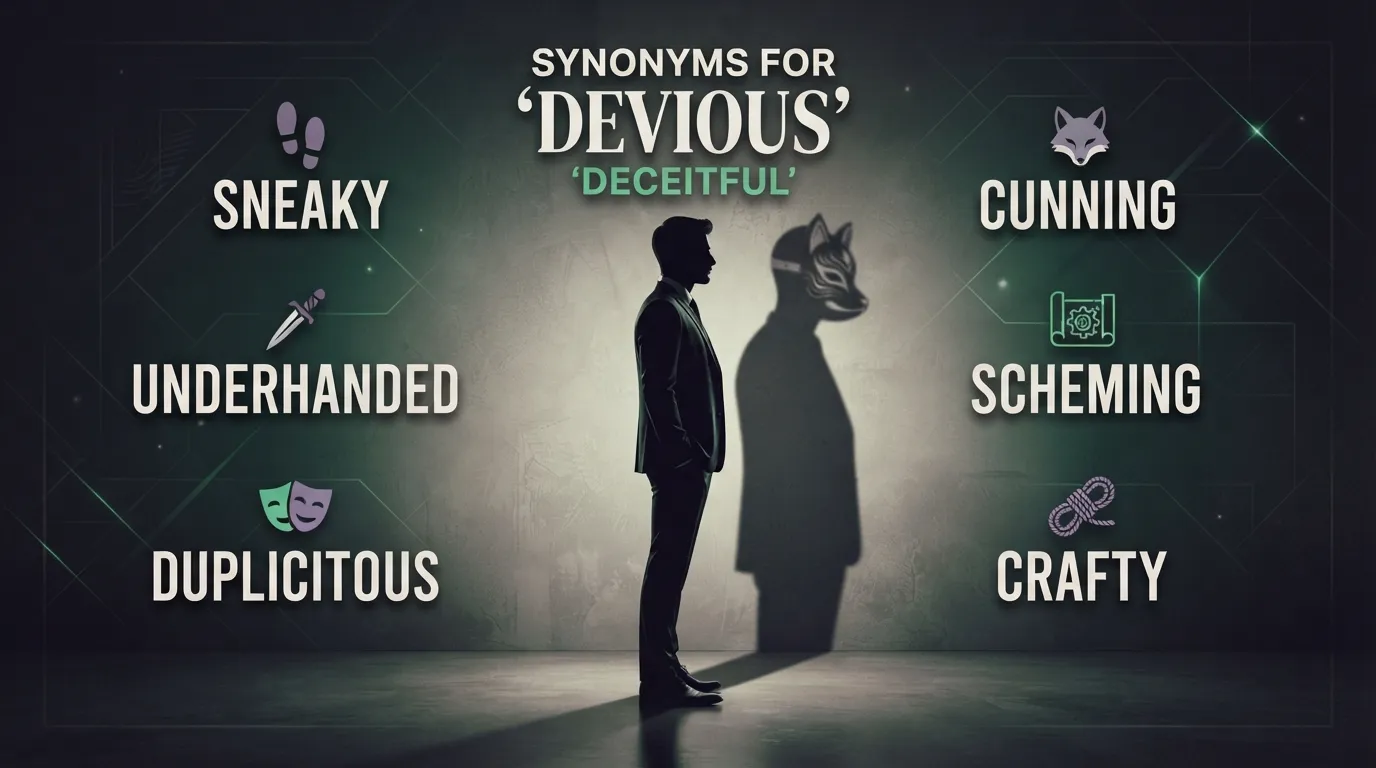
Sneaky is the most common everyday replacement, slightly less formal, and often used for smaller scale dishonesty, such as a child sneaking a cookie versus an adult running a scheme. It works well in casual writing and conversation, and it tends to feel less severe than devious, making it a good choice when you want to describe minor concealment rather than serious wrongdoing.
Cunning emphasizes intelligence used for deceptive purposes and can carry a note of respect for the person’s skill, even while criticizing their honesty. Cunning often appears in storytelling, especially in describing villains or rivals whose intelligence makes them genuinely formidable, not just dishonest.
Underhanded focuses specifically on unfair or dishonest methods, especially in competitive or professional contexts, as in “underhanded business tactics.” This word works particularly well in workplace, legal, or competitive writing, where the emphasis falls on breaking rules or norms rather than general dishonesty of character.
Scheming implies an ongoing pattern of planning deception, often over time, rather than a single dishonest act. Someone who is scheming isn’t just dishonest in the moment; they are actively plotting, often across multiple steps or a longer timeline, toward a specific manipulative goal.
Duplicitous is more formal and precise, describing someone who deliberately deceives by saying one thing and doing another, often in relationships or negotiations. This word carries real weight and formality, making it a strong choice for serious accusations of hypocrisy or betrayal rather than casual dishonesty.
Beyond these five, plenty of other useful alternatives exist, each suited to slightly different contexts, tones, and levels of severity.
20 Synonyms for Devious
- Sneaky
- Cunning
- Underhanded
- Scheming
- Duplicitous
- Deceitful
- Crafty
- Calculating
- Manipulative
- Sly
- Shifty
- Wily
- Two faced
- Conniving
- Tricky
- Dishonest
- Devious minded (intensified phrase)
- Foxy (informal, less common today)
- Slippery (informal)
- Guileful (formal, literary)
Each of these words brings its own flavor to the idea of dishonesty. “Sly” suggests quiet, subtle deception, often paired with a knowing smile or wink, while “shifty” implies visible nervousness or suspicious behavior that hints at hidden dishonesty. “Wily” leans toward resourceful trickery, often used to describe someone who consistently outsmarts others through clever, if questionable, tactics.
“Two faced” specifically emphasizes hypocrisy, describing someone who presents one version of themselves to your face and a completely different, dishonest version behind your back. “Conniving” carries real weight, suggesting active plotting alongside others or against someone specifically, often with a sense of betrayal involved. “Tricky” feels lighter and more playful, sometimes even affectionate, useful for describing minor mischief rather than serious wrongdoing.
“Dishonest” is the plainest, most direct option on the list, stripped of any nuance about cleverness or method, simply describing a lack of truthfulness. “Foxy,” though less common in modern usage, evokes an old fashioned image of sly, animal like cunning, and now reads as slightly dated or literary. “Slippery” suggests someone hard to pin down or hold accountable, frequently used to describe people who evade responsibility or consequences. “Guileful,” a more formal and literary term, works well in academic or classic literature analysis, where a more elevated vocabulary fits the tone.
Types of Synonyms for Devious
Milder or more neutral leaning: crafty, wily, tricky, foxy, calculating.
Standard negative: sneaky, sly, shifty, deceitful, manipulative.
Strong or formal: duplicitous, conniving, guileful, underhanded, scheming.
Crafty and wily are the closest this list comes to a neutral tone, since both can occasionally describe admirable resourcefulness rather than pure dishonesty, depending on context. A crafty negotiator, for example, might simply be skilled and strategic rather than genuinely dishonest, while a wily survivor might be praised for resourcefulness under difficult circumstances rather than criticized for deception.
This grouping matters because tone shifts significantly across these categories. Choosing “crafty” instead of “conniving” can turn a harsh character description into something almost admirable, while choosing “conniving” instead of “crafty” sharpens the same description into a clear moral judgment.
Intensity Scale
Mild leaning: crafty, tricky, wily.
Moderate: sneaky, sly, shifty, calculating.
Strong: manipulative, underhanded, deceitful, conniving.
Very strong or formal: duplicitous, guileful, scheming.
Duplicitous in particular is reserved for serious, deliberate deception, and using it for a minor act, such as hiding a surprise party, would sound exaggerated. Matching intensity to context is one of the most important skills in choosing the right synonym, since an overly strong word can make a minor situation sound like a serious betrayal, while an overly mild word can undersell genuinely harmful behavior.
Consider the difference between describing a friend’s harmless white lie as “sneaky” versus “duplicitous.” The first feels proportionate and even a little playful, while the second implies calculated, serious betrayal that doesn’t match a small, well meaning fib.
Common Collocations and Natural Usage
“Devious scheme” and “devious plan” are extremely common; “devious tactics” and “devious methods” also work well. These pairings appear constantly in fiction, news writing, and everyday conversation about dishonest strategies.
“Sneaky” pairs naturally with smaller, almost playful dishonesty, as in “a sneaky glance” or “a sneaky snack,” where “devious glance” would sound oddly severe. This mismatch happens because devious carries more weight and seriousness than casual, everyday sneakiness.
“Manipulative” most naturally describes behavior toward people specifically, as in “a manipulative partner,” while “devious” can describe both people and plans. You wouldn’t typically call a business strategy “manipulative” unless it directly targeted people’s emotions or decisions, whereas “devious” comfortably describes plans, methods, and general character alike.
Other natural pairings include “cunning strategy,” “underhanded deal,” “scheming rival,” and “duplicitous behavior.” Each of these phrases has settled into common usage precisely because the adjective and noun match in both tone and intensity.
Devious vs Similar Words
Devious vs Clever: clever is neutral or positive, praising intelligence; devious specifically implies that the intelligence is being used dishonestly. A clever solution solves a problem well; a devious solution solves a problem while deceiving someone along the way.
Devious vs Sneaky: sneaky often describes smaller, sometimes harmless acts of concealment; devious usually implies a more deliberate, larger scale, or more harmful intent. Sneaking a bite of dessert before dinner is sneaky, not devious, while orchestrating a complex financial fraud is devious, not merely sneaky.
Devious vs Manipulative: manipulative focuses specifically on controlling or influencing people’s emotions or decisions; devious is broader and can apply to plans, methods, or general character, not only interpersonal control. A devious business strategy might not involve manipulating any specific person directly, while manipulative behavior almost always targets someone’s feelings or choices.
Devious vs Deceitful: deceitful focuses purely on the act of lying or misleading, without necessarily implying the strategic planning that devious often suggests. Someone can be deceitful in a single careless lie, while devious usually implies a more calculated, ongoing pattern of dishonesty.
How to Choose the Right Synonym
If you want a lighter, more playful tone, use sneaky, tricky, or foxy.
If you want to emphasize intelligence behind the dishonesty, use cunning or crafty.
If you are describing unfair competitive or business behavior, use underhanded.
If you want a formal, serious tone, use duplicitous or guileful.
If the deception specifically targets a person’s emotions or decisions, use manipulative rather than devious.
If you’re writing fiction and want to build a morally complex character, cunning or scheming often work best, since they suggest intelligence and planning without fully collapsing the character into simple villainy. If you’re writing a news article about corporate wrongdoing, underhanded or duplicitous fit the serious, formal tone readers expect. And if you’re simply describing a mischievous child or a lighthearted moment of trickery, tricky or sneaky keep the tone appropriately gentle.
Common Mistakes with Devious
Do not use devious as a simple compliment for intelligence; it always implies at least some dishonesty, unlike clever or smart. Calling someone’s brilliant, honest solution “devious” sends the wrong message, suggesting deception where none exists.
Avoid pairing devious with people who are merely private or quiet. Devious specifically implies active deception, not reserved behavior. A quiet, introverted coworker isn’t devious simply because they don’t share much; devious requires actual dishonest intent or action.
Be careful with duplicitous, which describes a specific pattern of saying one thing while doing another, rather than dishonesty in general. Using duplicitous for a single random lie, without any pattern of contradiction between words and actions, stretches the word beyond its precise meaning.
Another common mistake involves overusing devious in formal or professional writing when a milder word like calculating or strategic would communicate the point without as much moral judgment. Not every competitive or strategic decision deserves the harsh implication that devious carries.
Antonyms of Devious
Honest, straightforward, forthright, and transparent are the clearest opposites, describing people or plans that are open and truthful rather than concealed or manipulative. Other useful antonyms include candid, sincere, and above board, each emphasizing openness and a lack of hidden agendas. Choosing the right antonym often depends on whether you’re describing a person’s character, as with honest or sincere, or a specific process or plan, as with transparent or above board.
FAQ
What does devious mean?
It describes someone or something dishonest or deceptive, often using indirect or underhanded methods to achieve a goal.
What is another way to say devious?
Sneaky, cunning, and underhanded are the most natural common alternatives.
What is the strongest synonym for devious?
Duplicitous and conniving both carry a particularly strong, deliberate sense of deception.
Is devious always negative?
Almost always, though it can occasionally carry a grudging note of admiration for someone’s cleverness.
What is the opposite of devious?
Honest or straightforward.
Can devious ever describe a plan rather than a person?
Yes. Devious comfortably describes plans, schemes, and methods, not just individual character, as in “a devious plan to avoid paying taxes.”
Is calculating the same as devious?
Not quite. Calculating suggests careful, strategic thinking that may or may not involve dishonesty, while devious specifically implies that deception is part of the approach.
Conclusion
Devious captures a very specific kind of dishonesty, one built on calculation, concealment, and often a surprising degree of cleverness. Whether you need something lighter like sneaky or tricky, something formal like duplicitous or guileful, or something squarely in the middle like cunning or manipulative, the right synonym depends heavily on tone, severity, and exactly what kind of deception you’re describing. Matching the word’s intensity to the situation keeps your writing precise, whether you’re crafting a morally complex fictional villain, describing questionable business practices, or simply calling out a friend’s playful little lie.
Read More: Synonyms for Bullshit: 30 Powerful Words to Know

Hi, I am Abid, a writer and editor at InstantSynonyms.com, where he creates clear and reader-friendly content about synonyms, vocabulary, and English word usage. His goal is to help readers choose the right words, expand their vocabulary, and write with greater confidence.