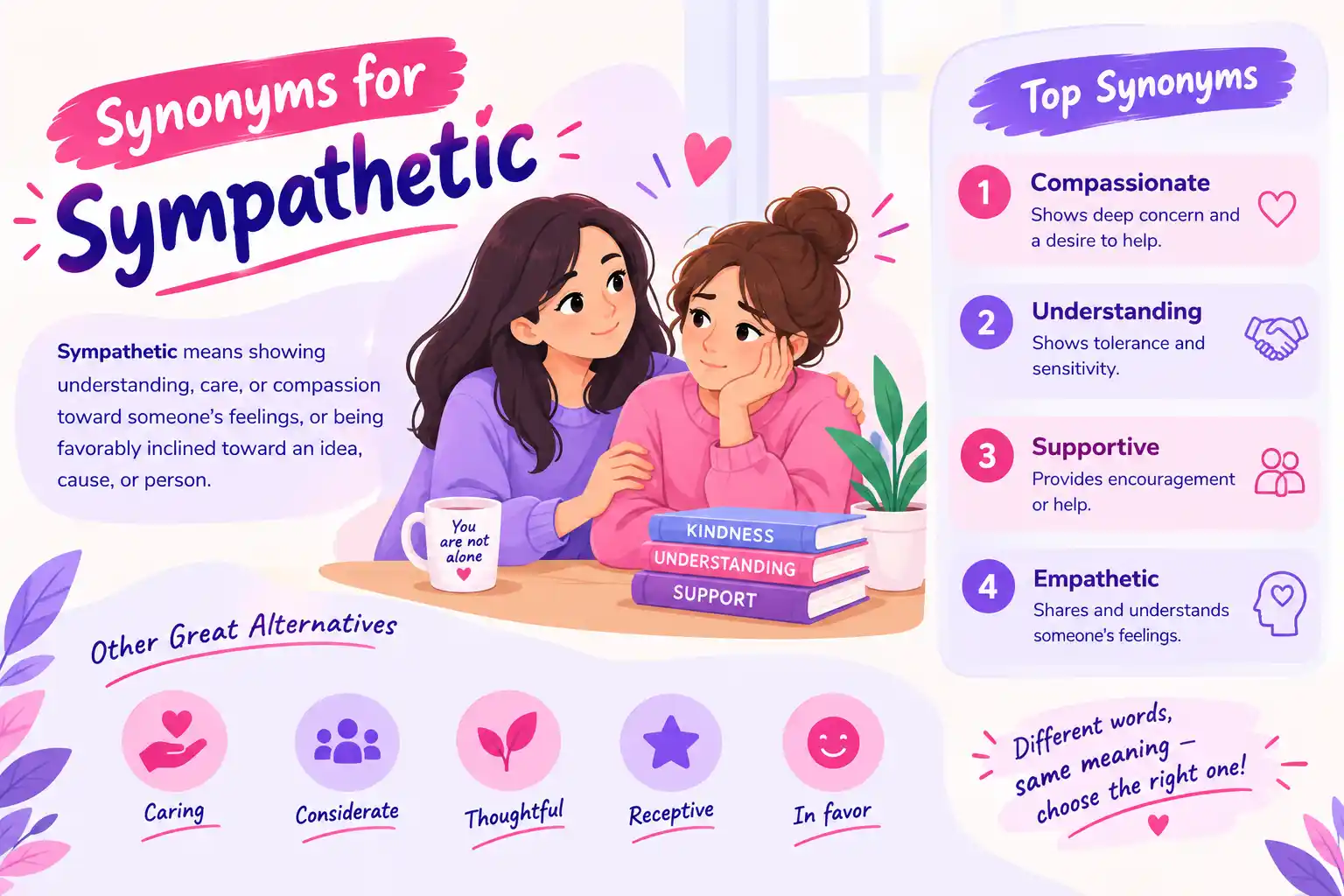
Sympathetic means showing understanding, care, or compassion toward someone’s feelings, or being favorably inclined toward an idea, cause, or person. Strong alternatives include compassionate and understanding for emotional support, and favorable or receptive for agreement with an idea. The right choice depends on whether you mean emotional comfort or simple approval.
Meaning of Sympathetic
Sympathetic has two closely related but distinct main senses. The first, and most common, describes feeling or showing compassion, concern, or understanding toward someone else’s suffering or difficulty, as in “she gave a sympathetic nod when I explained what happened.” This sense focuses on emotional support.
The second sense describes being favorably disposed toward an idea, proposal, or cause, without necessarily involving personal emotional support, as in “the committee was sympathetic to the new proposal.” Here, sympathetic simply means inclined to agree or support, closer in meaning to receptive or in favor.
A third, more casual usage describes a person or fictional character as likeable or easy to relate to, as in “the film’s main character is genuinely sympathetic,” meaning the audience naturally feels connected to or supportive of them.
Connotation and Nuance
Sympathetic almost always carries a warm, positive connotation. It suggests emotional attentiveness and a willingness to understand another person’s situation, rather than judgment or indifference. However, the word can occasionally sound slightly passive, since being sympathetic does not necessarily involve taking action, only understanding or feeling for someone, which is why writers sometimes choose stronger alternatives like supportive or compassionate when action, not just feeling, needs to be emphasized.
Pronunciation
Sympathetic is pronounced /ˌsɪm.pəˈθet.ɪk/ (sim puh THET ik) in both American and British English.
Etymology
Sympathetic comes from Greek sympathes, formed from syn meaning together and pathos meaning feeling or suffering, giving the combined sense of feeling together with someone. The word entered English through Latin and French by the seventeenth century, originally describing a shared emotional connection, before extending to its modern senses of compassion and favorable agreement.
Best Synonyms for Sympathetic
1. Compassionate
Part of Speech: Adjective
Meaning: Showing deep concern for the suffering or misfortune of others, often accompanied by a desire to help.
Best Use: Works especially well when the situation involves real hardship, loss, or suffering, rather than minor disappointment.
Tone or Register: Formal to neutral, common in professional, medical, and emotional contexts.
Difference: Compassionate is stronger than sympathetic and often implies a deeper emotional investment, sometimes paired with a genuine desire to help rather than simply understand.
Examples: The nurse was compassionate with every patient, even during the busiest shifts. He wrote a compassionate letter to the grieving family.
2. Understanding
Part of Speech: Adjective
Meaning: Showing tolerance and sensitivity toward another person’s feelings, situation, or point of view.
Best Use: Works well in interpersonal or workplace contexts where patience and openness matter more than emotional intensity.
Tone or Register: Neutral, common in everyday conversation and professional writing.
Difference: Understanding focuses more on tolerance and patience than on emotional depth, while sympathetic more directly implies shared feeling for someone’s hardship.
Examples: Her manager was understanding when she needed to leave early for a family emergency. Being understanding does not mean ignoring the problem entirely.
3. Supportive
Part of Speech: Adjective
Meaning: Providing encouragement, help, or emotional backing to someone.
Best Use: Works well when the emphasis is on active help or encouragement, rather than simply feeling or expressing concern.
Tone or Register: Neutral, common in personal relationships and professional settings alike.
Difference: Supportive implies action or ongoing encouragement, while sympathetic can describe a feeling without necessarily involving any concrete help.
Examples: His friends were incredibly supportive throughout his recovery. A supportive workplace culture makes a real difference during difficult times.
4. Empathetic
Part of Speech: Adjective
Meaning: Able to understand and share the feelings of another person, often through genuine emotional connection.
Best Use: Works well when the emphasis is on truly understanding someone’s experience, rather than simply feeling sorry for them.
Tone or Register: Neutral to formal, increasingly common in psychology, healthcare, and workplace communication.
Difference: Empathetic implies a deeper, more personal understanding of someone’s exact emotional experience, while sympathetic can describe a more general sense of concern or pity from the outside.
Examples: The therapist remained empathetic without becoming emotionally overwhelmed herself. Good leaders are often empathetic toward the struggles of their team.
5. Favorable
Part of Speech: Adjective
Meaning: Showing approval or support for an idea, plan, or proposal.
Best Use: Works specifically for the second sense of sympathetic, describing agreement with an idea rather than emotional support for a person.
Tone or Register: Neutral to formal, common in business, politics, and academic writing.
Difference: Favorable applies to ideas, proposals, and situations rather than people’s emotional states, making it a contextual alternative rather than a direct emotional synonym.
Examples: The board seemed favorable toward the proposed merger. Early reviews were favorable, boosting confidence ahead of the launch.
28 Synonyms for Sympathetic
- Compassionate
- Understanding
- Supportive
- Empathetic
- Favorable
- Caring
- Kind
- Considerate
- Warm
- Tender
- Comforting
- Consoling
- Receptive
- Well disposed
- In favor
- Agreeable (contextual, for the idea sense)
- Approving
- Pitying (contextual, can sound condescending)
- Compassionate hearted (informal, less common)
- Concerned
- Attentive
- Gentle
- Soft hearted
- Congenial (contextual, for the likeable person sense)
- Likeable (contextual, for the character or personality sense)
- Relatable (contextual, for the character sense)
- Solicitous (formal, literary)
- Feeling for (idiomatic, informal)
Types of Synonyms for Sympathetic
Emotional support alternatives such as compassionate, caring, and comforting apply when someone is offering emotional understanding to a person going through hardship.
Approval or agreement alternatives such as favorable, receptive, and in favor apply specifically to the second sense of sympathetic, describing support for an idea or proposal rather than a person’s feelings.
Personality or character alternatives such as likeable, relatable, and congenial apply to the third, more casual sense of sympathetic, describing a person or fictional character the audience naturally warms to.
Sympathetic vs Similar Words
Sympathetic vs Empathetic: Sympathetic often implies feeling sorry for someone from the outside, while empathetic implies actually understanding and sharing their emotional experience more personally.
Sympathetic vs Supportive: Supportive implies active help or encouragement, while sympathetic can describe understanding or concern without necessarily involving any concrete action.
Sympathetic vs Favorable: Favorable applies to ideas, plans, or proposals, while sympathetic in its emotional sense applies specifically to people and their feelings, making these words interchangeable only in the agreement related sense of sympathetic.
How to Choose the Right Synonym
If someone is going through genuine hardship or grief, compassionate or comforting captures the emotional depth needed. If the context is more about tolerance and patience, such as a workplace situation, understanding fits naturally. If you want to emphasize real, active help rather than just feeling, supportive is the stronger choice. If you are describing agreement with an idea or proposal rather than support for a person, favorable or receptive communicates that meaning precisely. If you are describing a likeable character in a story or film, relatable or congenial fits better than any of the emotional support synonyms.
Common Mistakes with Sympathetic
A common mistake is using sympathetic when supportive is actually meant, since sympathetic can describe feeling for someone without any accompanying action, while supportive implies real help or encouragement. Another mistake is confusing sympathetic with empathetic, treating them as fully interchangeable, when empathetic implies a deeper, more personal understanding of someone’s specific emotional experience. Writers also sometimes use sympathetic to describe an idea or proposal instead of favorable or receptive, which can sound slightly awkward, since the emotional connotation of sympathetic fits people more naturally than plans or policies.
Antonyms of Sympathetic
Unsympathetic, indifferent, callous, cold, dismissive.
FAQ
What does sympathetic mean? Sympathetic means showing understanding, compassion, or concern for someone’s feelings, or being favorably inclined toward an idea or cause.
What is another way to say sympathetic? Compassionate, understanding, and supportive are common alternatives for the emotional sense, while favorable and receptive work for the sense of agreeing with an idea.
What is the difference between sympathetic and empathetic? Sympathetic often implies feeling sorry for someone from an outside perspective, while empathetic implies personally understanding and sharing their emotional experience.
Is sympathetic the same as supportive? Not exactly. Sympathetic can describe feeling concern without action, while supportive implies actively helping or encouraging someone.
Can sympathetic describe an idea instead of a person? Yes. In this sense, sympathetic means favorably inclined or supportive of a proposal, and favorable or receptive are natural alternatives in that context.
What is the opposite of sympathetic? Unsympathetic, indifferent, and callous are common opposites.
How do I use sympathetic in a sentence? You can say, “She listened in a sympathetic way as he described his difficult week,” for the emotional sense, or “The panel was sympathetic to the idea of extending the deadline,” for the sense of favorable agreement.
Conclusion
Sympathetic covers more ground than it first appears, from genuine emotional comfort to simple agreement with an idea. Compassionate and understanding suit emotional situations involving real hardship, supportive emphasizes action rather than feeling alone, and favorable or receptive fit the sense of agreeing with a plan or proposal. Choosing the right synonym depends on whether you are describing emotional connection to a person, active help, or approval of an idea, and keeping that distinction clear will make your writing sound far more precise and genuine.

Hi, I am Abid, a writer and editor at InstantSynonyms.com, where he creates clear and reader-friendly content about synonyms, vocabulary, and English word usage. His goal is to help readers choose the right words, expand their vocabulary, and write with greater confidence.